As an Amazon Associate, we earn from qualifying purchases. Some links may be affiliate links at no extra cost to you. Although our opinions are based on curated research, we haven't used these products. Articles generated with AI.


What Are The Best Ways To Store Knitted Products Long-term?

To store knitted products long-term, first control the climate. Keep temperatures at 65°F to 70°F and humidity between 40% and 55%. Always clean your knits before storage, preferably by hand washing in cold water. Use the KonMari folding method for neatness. Choose airtight plastic containers, with silica gel packets for moisture control. Inspect your knits every few months for pests or damage. Following these tips can help maintain your knits for a longer time! You can learn more about specific care techniques.
Key Takeaways
- Clean knitted items thoroughly before storage to remove dirt and pests, ensuring they are completely dry to prevent mildew.
- Use the KonMari folding technique or roll thin knits for space-saving, avoiding sharp folds to prevent creasing.
- Store items in airtight plastic containers or acid-free boxes with silica gel packets to reduce humidity and protect against pests.
- Regularly check stored knits for signs of damage, mold, or pests, especially during climate changes; repair any issues promptly.
- Rotate and gently air out stored items occasionally to maintain freshness and minimize creasing during long-term storage.
Understanding Climate and Environment Control
You may be interested



Understanding climate and environment control is key to storing knitted products safely. The storage environment needs to be stable. Keeping the temperature between 65°F and 70°F helps prevent fiber damage. Humidity control is important too, with levels between 40% and 55% ideal. This balance stops mold from growing while avoiding brittleness caused by dryness. Changes in temperature or humidity can cause many problems, like fiber swelling or pest attraction. Using dehumidifiers and humidifiers can help maintain these levels, but regular checks are needed. Also, protecting the knitted products from light is essential. Light can fade colors and weaken fibers. Consequently, proper climate control is vital to guarantee knitted items stay in good condition over time. Additionally, choosing high-quality materials, such as jumbo chenille yarn, can also enhance the longevity of your knitted products.
Importance of Cleaning Before Storage
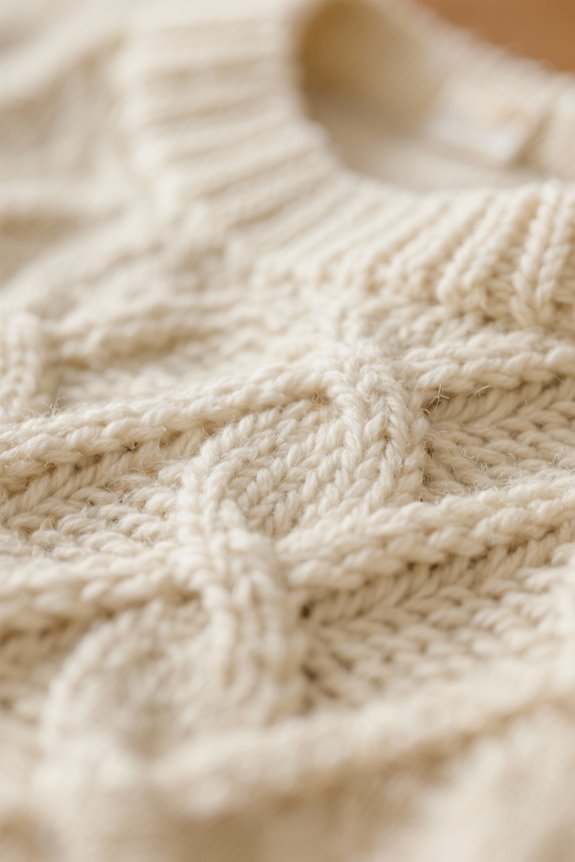
Cleaning knitted products before storage is very important. Dirt, oils, and sweat can attract pests like moths. This makes cleaning techniques essential to protect knitted items. Washing removes these residues that insects like to feed on. It is best to hand wash in cold water with a gentle, wool-safe detergent. If using a machine, select a gentle cycle and avoid hot water. Cleaning also helps prevent odors during long storage. Always dry completely to keep mold and mildew away. Lay the knits flat or use a drying rack, avoiding tumble drying. By using proper storage materials, clean knits have a longer life and maintain their appearance. Additionally, proper care such as avoiding harsh detergents ensures the items remain in great condition. Clean knitted items are safer and fresher for future use.
Best Practices for Folding Knitted Items
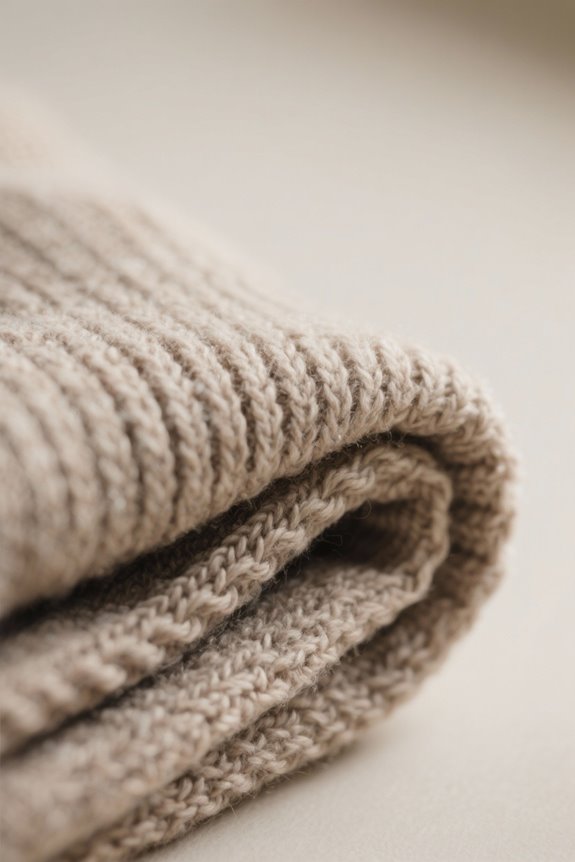
Folding knitted items properly is essential for keeping them in good shape. The KonMari folding technique is a great choice. First, fold the item into thirds lengthwise. Then, fold it into thirds again horizontally. This method helps minimize deep creases. For hooded sweaters, it’s best to fold the hood down flat before using this folding technique. Always avoid sharp folds in the center to prevent permanent creasing. Rolling thin knits can be a smart space-saving strategy. However, bulky sweaters should be folded flat. It’s also important to fold along natural seams for better shape. When storing, smooth out creases gently to maintain fabric integrity. This will keep knitted items looking their best for a long time! Additionally, consider using specific washing methods for different knitted materials to preserve their quality over time.
Recommended Container Options for Storage
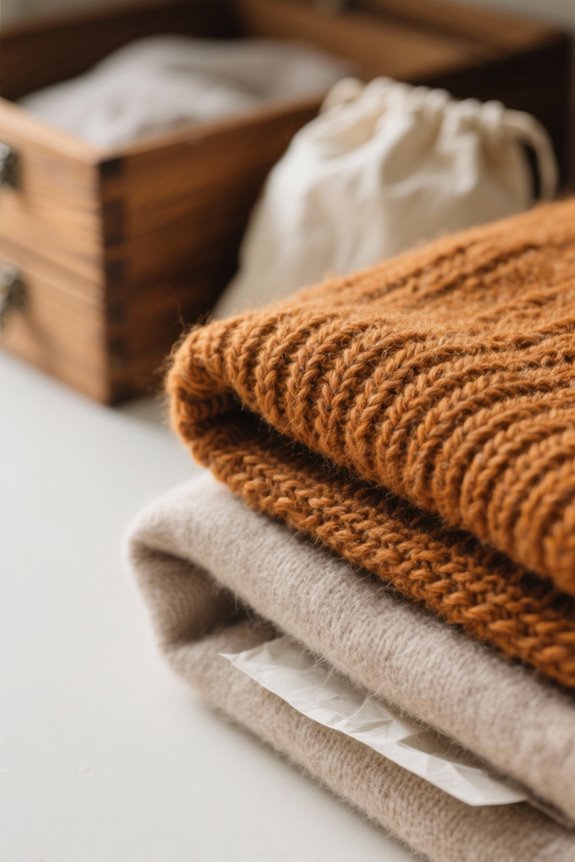
After folding knitted items properly, selecting the right containers for storage is similarly important. Airtight plastic containers are a top choice. These boxes keep moisture and insects out, protecting the knitted items. Clear plastic bins help with organizing by allowing easy visibility of contents. Using silica gel packets inside can reduce humidity, which is good for the yarn.
Closets or cabinets can also work well. They keep knitted products away from sunlight and dust. Climate control in these areas helps maintain temperature too. Acid-free boxes are a durable choice for some. For project storage, specialty bags and pouches can be used. Overall, the right container materials and organizing bins are essential for maintaining the quality of knitted products over time. Additionally, ensuring the use of high-quality materials can further enhance the longevity of your knitted items.
Ensuring Pest Protection for Knitted Products

Pest protection is essential for knitted products to stay in good condition. First, clean all items by washing or dry cleaning to remove pests. Inspect for signs of pest infestation or damage. It’s important for fibers to be completely dry before storage. Freezing knitted items for 24-48 hours can kill pests like wool moths. Use natural deterrents like cedar blocks and essential oils, such as eucalyptus and lavender, to help keep pests away. Store products in sealed containers, avoiding thin plastic bags. Make sure to check storage areas often for any early pest identification. Maintaining a clean and dry environment prevents pest attraction, ensuring the longevity of knitted treasures. Regular monitoring is key for a pest-free collection. Using materials like 100% cotton blankets can also enhance their durability against potential damage from pests.
Handling and Maintenance During Storage
Proper handling and maintenance of knitted products during storage is essential to keep them in good shape. One of the best storage techniques is to fold knitted items instead of hanging them. This avoids stretching and distortion of fabric elasticity. Gentle folding techniques help prevent sharp creases. Layering acid-free tissue paper between folds helps with fabric preservation by reducing pressure marks. Items should be refolded every few months to maintain their form. A cool, dry, and dark environment is important too. This protects the knits from heat damage and moisture. Breathable fabric bags are preferred over plastic. Periodic inspection for odors and damage guarantees that stored knitted goods stay fresh. With these steps, knitted products will remain in good condition. Additionally, storing them carefully aligns with the requirement for gentle handling to maintain their integrity and longevity.
Specific Considerations for Wool Knits
When storing wool knits, there are many specific considerations that need attention. Wool has unique fiber characteristics, which means care is important. First, always fold wool knits instead of hanging to prevent stretching. Use breathable fabric bags for dust protection and air circulation. Store them in a cool, dry place with stable temperatures. Layer them with acid-free tissue paper for shape maintenance. It is essential to keep wool completely dry. Even small dampness can cause mold and bad smells. Inspect stored items regularly for pests and damage. Clean your knits properly before storage to avoid attracting bugs. These practices help with storage longevity, ensuring the quality of wool knits stays intact over time.
Protecting Dyed Fibers From Light Exposure
How can one protect dyed fibers from harmful light exposure? To prevent fading, UV protection is essential. Using lightfastness dyes helps as they absorb UV radiation without degrading. Thicker fabrics often block more UV light. Higher dye concentration can improve protection by absorbing harmful rays. Dye chemical bonds to the fibers also matter; strong bonds resist fading better.
Textile treatments like UV absorbers can be applied during dyeing or added later. These treatments help absorb UV energy, enhancing textile durability. Storing knitted products away from direct sunlight keeps them safer. Using UV-blocking covers during storage further shields the fibers. Following these practices will maintain the color and strength of dyed fabrics over time, ensuring longer-lasting beauty.
Caring for Acrylic and Synthetic Blends
Acrylic and synthetic blends are popular choices for many knitters because of their durability and ease of care. When caring for these items, it is best to hand wash in warm water with a gentle detergent. This helps to keep the fibers strong. Avoid hot water to stop weakening or warping. After washing, gently squeeze excess water out and do not twist or wring. Dry items flat on a towel, away from sunlight. For storage, fold loosely rather than hanging. Place acid-free tissue between layers to maintain shape. Store in cool, dark areas to prevent mildew. Adding cedar blocks can help keep pests away. With good acrylic care, these blends will last a long time.
Storage Tips for Delicate Fibers Like Cashmere
Storing delicate fibers like cashmere requires special care. Cashmere care is different from other fabrics. First, avoid hanging cashmere. Hanging it can stretch fibers, changing their shape. Instead, use proper folding techniques. Fold garments carefully and stack them with breathable cloth layers in between. This helps prevent creases and damage. Store cashmere in a clean, dry space. A well-ventilated area is important for preventing mildew. Use breathable bags instead of plastic or cardboard to protect items from dust and pests. Moths are also attracted to cashmere. Use natural repellents like cedar blocks. Regularly check for pest activity, too. Clean and dry items before storing to keep them fresh and safe from damage.
Storing Yarn and Unfinished Knitted Items
When it comes to yarn and unfinished knitted items, proper storage is important for keeping them in good condition. Storing them in a dry, dark place helps to prevent damage from moisture and sunlight. The right storage temperature is also critical. Avoid basements if they are humid and attics if they have extreme temperatures or pests. For yarn organization, use breathable containers, like wicker baskets, or clear plastic bins with lids. These help protect against dust and pests while still allowing visibility. Unfinished items should be clean and dry. Gently fold them to avoid creasing. Above all, verify that the area is well-ventilated to prevent mold behind containers. Keeping everything tidy will help maintain yarn and projects for future use.
Regularly Inspecting Stored Knits
Inspecting stored knits regularly is key to keeping them in good shape. The inspection frequency should be every few months for the best preservation. During these checks, look for damage detection like stretching, discoloration, or pests. If the climate changes, more frequent inspections are important. Check for signs of mold or mildew as well. Also, air out the garments to prevent mustiness and refresh fibers. Handle the knits carefully when inspecting to avoid stress on the fabric. Unfold and refold them gently. If any pilling, snags, or holes are found, repair those promptly. Keeping a record of the condition during inspection is wise, so one can track changes over time.
Techniques for Unpacking and Refreshing Stored Knits
Unpacking and rejuvenating stored knits requires careful handling to prevent damage. First, open the storage container slowly. This prevents snagging on delicate fibers. Next, gently remove knits one at a time. This helps keep their shape intact. Unfold each piece carefully, supporting any fragile edges. Avoid yanking seams or edges, as this can cause harm. Allow the knits to adjust to room temperature gradually. This way, moisture doesn’t build up.
For an added touch, consider using air to freshen your knits if they smell musty. Periodically rotate stored items to reduce creases. These simple unpacking strategies protect your knits and keep them in good condition. Knit organization is key to preserving your favorite pieces.
Extending the Life of Knitwear Through Proper Care
Proper care of knitwear plays a big role in extending its life. Store knitwear in a cool, dry, and climate-controlled area. This helps avoid damage from climate fluctuations. Avoid damp spaces that can lead to mold or moths. Instead, use breathable fabric storage bags. Fold garments carefully instead of hanging them. This prevents stretching, especially in heavier knits. For seasonal rotation, clean knitwear before packing and let it dry flat. Freeze knitwear briefly to kill any moth eggs. Place cedar blocks in storage, but do not let them touch the fabric. Monitor storage areas for pests, and shake out the knits occasionally. Following these steps will help keep knitwear looking good for many years.
Frequently Asked Questions
How Often Should I Check on My Stored Knitted Items?
Knitted items should be checked at least twice a year, with storage intervals reduced to every three months in humid climates. Regular inspections guarantee ideal item condition, preventing damage and maintaining the quality of stored knits.
Can I Use Vacuum-Sealed Bags for Storing Knits?
Vacuum sealing can be used for storing knits, but caution is necessary. Proper fabric protection, such as using breathable bags for delicate items, helps prevent damage from compression and guarantees garments remain intact during storage.
What Should I Do if My Knitwear Develops a Musty Smell?
When knitwear develops a musty odor, freshening techniques abound. Ironically, the quest for freshness may involve washing, drying, or even vinegar baths, turning cherished knits into oddly fragrant garments, battling the very problem they created.
Is It Safe to Store Knits in My Garage?
Storing knits in a garage is not safe due to extreme garage temperature fluctuations and inadequate humidity control. These conditions risk fiber damage, mildew growth, and pest infestations, compromising the integrity of knitted items over time.
How Do I Prevent Lint From Accumulating on Stored Knits?
To prevent lint accumulation, regularly check stored knits with lint removers, utilize breathable fabric bags for storage, and guarantee proper cleaning before putting them away to minimize dust and debris exposure over time.
Conclusion
To sum up, storing knitted products properly helps them last longer. Would you leave your favorite toy outside in the rain? No. The same goes for knits. Use the right climate control, clean items before storage, and choose suitable containers. Remember to check for pests as well. Follow these guidelines, and your knitted items will stay in good shape for years. Proper care is key, ensuring they remain just as cozy and colorful as the day you finished them.


