As an Amazon Associate, we earn from qualifying purchases. Some links may be affiliate links at no extra cost to you. Although our opinions are based on curated research, we haven't used these products. Articles generated with AI.


How To Clean And Store Bulky Knitted Blankets?

To clean bulky knitted blankets, first check the material tags for care instructions. For washing, use a gentle cycle in cold water or hand wash with mild detergent. Dry the blanket flat on a moisture-resistant surface, avoiding wringing. For storage, use breathable bags and keep blankets flat to maintain their shape. Regular aeration helps prevent mustiness. Following these simple tips will keep your blankets looking good for longer. More details on specific yarn types and mistakes are available.
Key Takeaways
- Check care instructions on tags to determine the appropriate washing method based on the fiber content of the blanket.
- Use cold water and a gentle detergent for machine washing, or soak in mild detergent for hand washing; rinse thoroughly.
- Lay the blanket flat on a moisture-resistant surface to dry, avoiding wringing or twisting to maintain its shape.
- Store knitted blankets in breathable containers and air them out regularly to prevent mustiness and maintain freshness.
- Rotate usage and gently shake or brush blankets to remove debris, ensuring they remain clean between washes.
Preparing for Cleaning Bulky Knitted Blankets
You may be interested


When preparing to clean bulky knitted blankets, it is important to first understand the material and fiber content. Fiber identification helps choose the right cleaning supplies. Is it wool, acrylic, cotton, or polyester? Check the tags for specific care instructions. Natural fibers like wool need more gentle treatment than synthetic ones. Examine the blanket for stains and mark spots for treatment. Look for weak areas like loose threads or holes. Remove dust and pet hair with a gentle brush or vacuum. Ascertain there are no deeper stains that need special care. Prepare mild detergent and choose lukewarm water to prevent damage. A clean environment is key to effective cleaning while preserving the blanket’s quality. Additionally, many blankets are machine washable, making them easier to care for in terms of long-term maintenance.
Washing Methods for Bulky Knitted Blankets
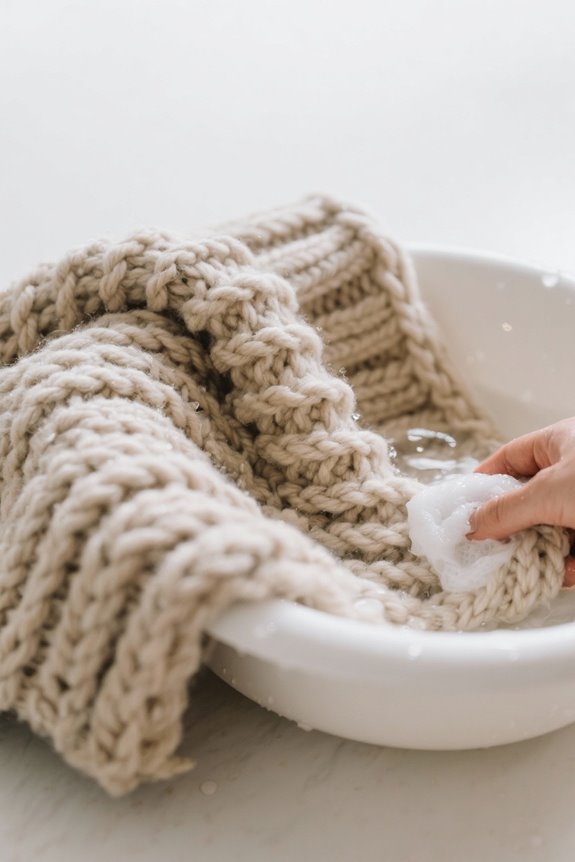
Cleaning bulky knitted blankets requires careful consideration of washing methods to maintain their shape and texture. For machine washing, use a gentle cycle and cold water. This helps prevent shrinkage. It’s wise to place the blanket in a mesh lingerie bag to reduce friction. Use mild, wool-safe detergents to keep the fibers safe. Avoid overloading the machine to prevent color bleeding.
For hand washing, soak the blanket in a tub of cold water with a mild detergent for 15 to 30 minutes. Gently agitate the blanket, but do not rub it. After soaking, rinse thoroughly with cold water to remove all soap. Remember to handle the wet blanket carefully to avoid stretching. Regular care helps keep blankets looking good, especially since many jumbo knit blankets are machine washable and designed for easy maintenance.
Drying and Handling After Washing
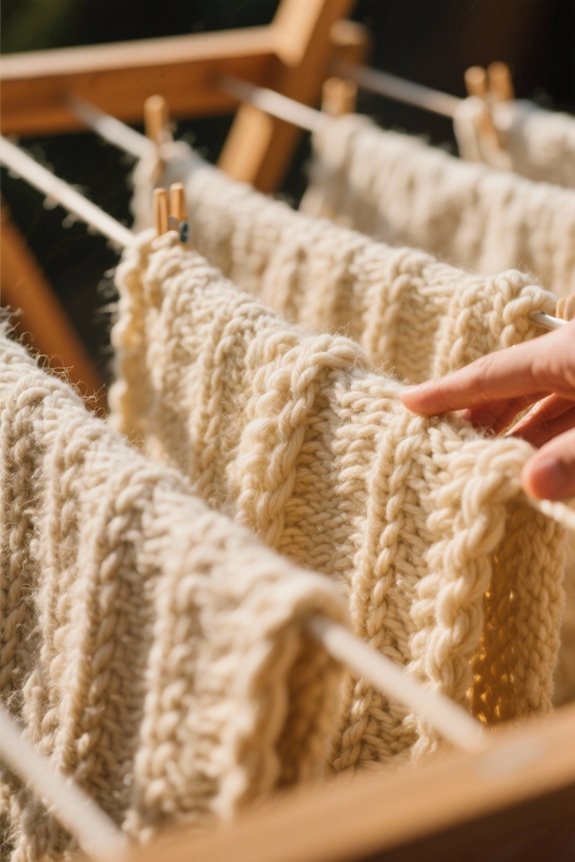
After washing bulky knitted blankets, how they are dried is very important. Proper drying techniques help keep the blanket’s shape. To start, lay the blanket flat on a moisture-resistant surface for best results. Never wring or twist the blanket, as this can cause distortion. Instead, handle excess water by gently rolling it in a large, dry towel. This absorbs the moisture without stressing the fibers. If the blanket is dryer-safe, use a low heat setting, adding dryer balls to maintain loftiness. Avoid direct sunlight and heat sources, as they can damage the fibers. Regularly flip the blanket to guarantee even drying. Good airflow is also key for preventing stretch and preserving texture during the drying process. Additionally, consider using high-quality materials to ensure the blanket remains comfortable and durable over time.
Storage Tips for Bulky Knitted Blankets
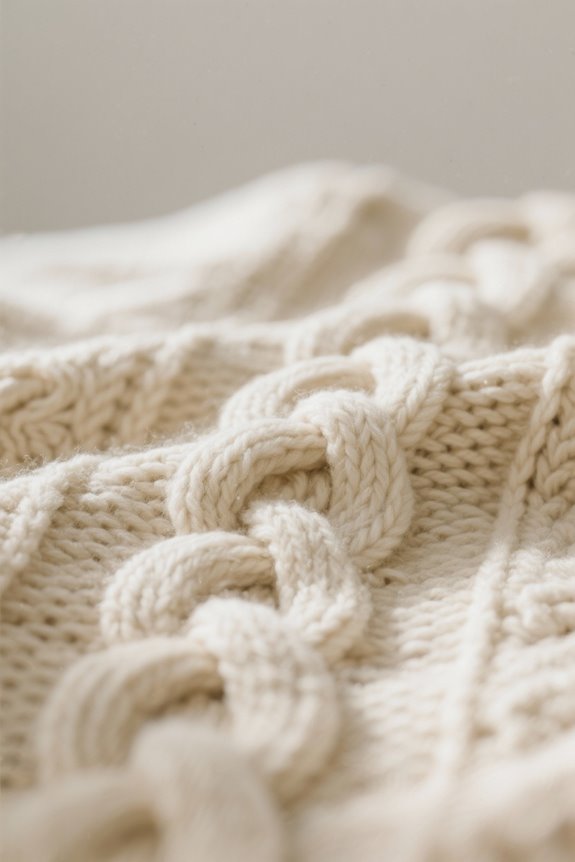
Proper storage of bulky knitted blankets is essential to keep them looking good and lasting long. Use breathable containers like bags made of cotton or breathable synthetics. These allow air to flow and prevent mildew and odors. Avoid plastic bags, which trap moisture. Good choices include cedar-lined chests for pest control and moisture management. It’s smart to keep bulky blankets flat, not rolled or compressed, to maintain their shape. Use clean cotton pillowcases or archival tissue paper when wrapping for long-term storage. Remember to regularly air out your blankets to avoid mustiness. Finally, check your storage for pests and humidity. Monitoring these factors helps keep your knitted blankets in top condition for years, especially when utilizing OEKO-TEX certified materials to ensure safety and longevity.
Handling and Maintenance Between Washes

Maintaining knitted blankets between washes is important for their longevity. To keep them fresh, gently shake or air out the blankets regularly. This helps to remove dust and maintain cleanliness without frequent washing, preserving yarn integrity. For surface debris, use fabric brushing or a lint roller with care, so fibers do not get damaged. It is wise to keep these blankets away from direct sunlight, as this can cause color fading and weaken fibers. Additionally, rotating the usage will help distribute wear evenly, making the blanket last longer. If stains happen, use mild detergent diluted in cold water. Blot stains gently with a cloth to avoid rubbing and fiber distortion. Proper handling is essential for keeping your blankets nice. Investing in quality material and comfort considerations ensures the durability of your knitted blankets.
Special Considerations for Different Yarn Types
When caring for knitted blankets made of different yarn types, it is important to understand their specific needs. Animal fiber types, like wool, alpaca, and silk, have special cleaning precautions. Wool needs cool water and gentle hand washing, while alpaca is soft and should also be washed gently. Angora, a fluffy fiber, requires delicate cleaning and extra care. Silk must be washed with mild soap to stay strong. Plant fibers like linen and cotton are often machine washable and dry well, but they don’t stretch well. Acrylic yarns are durable and easy to clean, but require gentle cycles in machines. Always follow labels to guarantee the correct care for these various fiber types. Additionally, alpaca wool socks have moisture-wicking properties and should be treated similarly for optimal longevity.
Avoiding Common Mistakes
Many individuals make simple mistakes when caring for knitted blankets. One common error is overwashing. Frequent washing can dry out natural fibers. This reduces softness and can distort stitches. Spot-clean small stains instead of washing the entire blanket. Also, avoid using harsh washing methods or detergents. Excessive agitation may lead to felting or distortion. Gentle washing is best. When it comes to storage materials, do not use plastic bags, as they trap moisture and damage fibers. Instead, choose breathable cotton bags. Store blankets in cool, dry places. Regularly inspect stored blankets to avoid permanent creases. Remember, choosing the right storage materials and washing methods is key to keeping knitted blankets in good shape for years!
Enhancing Longevity of Bulky Knitted Blankets
Enhancing the longevity of bulky knitted blankets requires careful washing and drying techniques. Using mild, neutral detergent is important for fiber care because harsh soaps can damage the fibers. Washing in cold water on a gentle cycle helps prevent stretching. For delicate blankets, hand washing is best, soaking them with wool detergent. After washing, air-drying flat on a clean towel or rack can keep their shape. It’s also helpful to spot clean stains to avoid frequent washing. Regularly inspect for loose stitches and perform blanket repair as needed. Proper storage is key; keep blankets flat or loosely folded in breathable bags. Avoid plastic or airtight containers, as they can trap moisture and cause damage.
Frequently Asked Questions
How Often Should I Wash My Bulky Knitted Blanket?
Bulky knitted blankets typically require washing every three months for ideal blanket care. However, factors such as usage frequency and environmental conditions can influence washing frequency, necessitating adjustments for stains or allergens present.
Can I Use Fabric Softener on Knitted Blankets?
Using fabric softener on knitted blankets can lead to disastrous effects on fibers, leading to stiffness and loss of breathability. Instead, consider fabric softener alternatives like vinegar or baking soda to maintain softness effectively.
What Should I Do if My Blanket Shrinks?
If a blanket shrinks, it can be soaked in warm water with fabric softener, then gently reshaped. Implementing shrink prevention techniques and appropriate washing methods can mitigate future issues related to shrinkage in knitted items.
How Do I Remove Stains Without Washing the Entire Blanket?
To remove stains without washing the entire blanket, she applied specific stain removal techniques. Gently blotting with a mild detergent solution and avoiding aggressive scrubbing were key blanket care tips for preserving its integrity and quality.
Can I Machine Dry My Knitted Blanket on Low Heat?
Machine drying knitted blankets on low heat is permissible only if care instructions allow. Adopting safe drying techniques guarantees the fibers remain intact, preserving the blanket’s shape and softness while minimizing potential damage from heat exposure.
Conclusion
In summary, cleaning and storing bulky knitted blankets is important for their care. Regular washing can help keep them looking fresh. Did you know that on average, a knitted blanket can last up to 10 years if properly maintained? To guarantee longevity, use the right washing methods and appropriate storage techniques. Following these simple steps can save time and effort in the long run. Enjoy cuddling with your clean blanket for years to come.