As an Amazon Associate, we earn from qualifying purchases. Some links may be affiliate links at no extra cost to you. Although our opinions are based on curated research, we haven't used these products. Articles generated with AI.


How To Mix And Match Pillow Cover Patterns?

To mix and match pillow cover patterns, start with a cohesive color palette. Choose 3-5 colors that work well together. Use both geometric and organic patterns, mixing larger prints with smaller ones. Follow the 60/30/10 rule for proportions. Vary pillow sizes and arrange them in odd numbers. Incorporate different textures for depth. Avoid too many distinct patterns and mismatched colors. This way, your pillows will look balanced and appealing. Learn more about advanced techniques next.
Key Takeaways
- Establish a cohesive color palette with 3-5 complementary colors to ensure visual harmony in your pillow arrangements.
- Mix different pattern types, such as geometric and organic, while limiting to three distinct patterns for balanced aesthetics.
- Apply the 60/30/10 rule in pillow sizes and patterns to create dynamic arrangements and visual interest.
- Incorporate various textures and fabrics to add depth and richness to your pillow displays without overwhelming the space.
- Arrange pillows in odd numbers and utilize asymmetrical positioning to create a more inviting and dynamic look.
Establishing a Cohesive Color Palette
You may be interested


Establishing a cohesive color palette is important in creating appealing spaces. Color harmony is key to effective design. First, know your colors: primary colors (red, blue, yellow) build your base. Then, secondary colors like green, orange, and purple add softness. Understanding warm and cool tones helps too. Warm colors can energize a room, while cool colors create calm. A limited palette of 3-5 colors works best to avoid chaos. Think about using monochromatic shades or analogous colors for subtlety, or complementing colors for contrast. Accent colors should be used sparingly to maintain balance. Finally, testing colors in different lights helps to see the true effect on your space, ensuring a pleasant atmosphere for everyone. Incorporating textiles like cable knit blankets into your design can enhance both color and texture, adding warmth to the overall aesthetic.
Understanding Pattern Types and Balance

Patterns in pillow covers play a significant role in home decor. They can be geometric patterns, like stripes and polka dots, or organic patterns that mimic flowers and leaves. Textured designs add depth with their fabric weaves and raised details. Mixing large-scale prints with small scale designs can make an interesting look. To achieve balance, limit patterns to three types and use balance techniques. Considering visual weight is important; heavier patterns should be balanced with lighter ones. This way, a pleasing aesthetic harmony is created. The psychological effects of patterns can influence mood. Balanced patterns avoid chaos and keep the space comfortable. Additionally, different material qualities of pillow covers can affect their texture and overall aesthetic appeal. As a result, proper pattern mixing is essential for a stylish decor.
Proportions, Sizes, and Arrangement Techniques
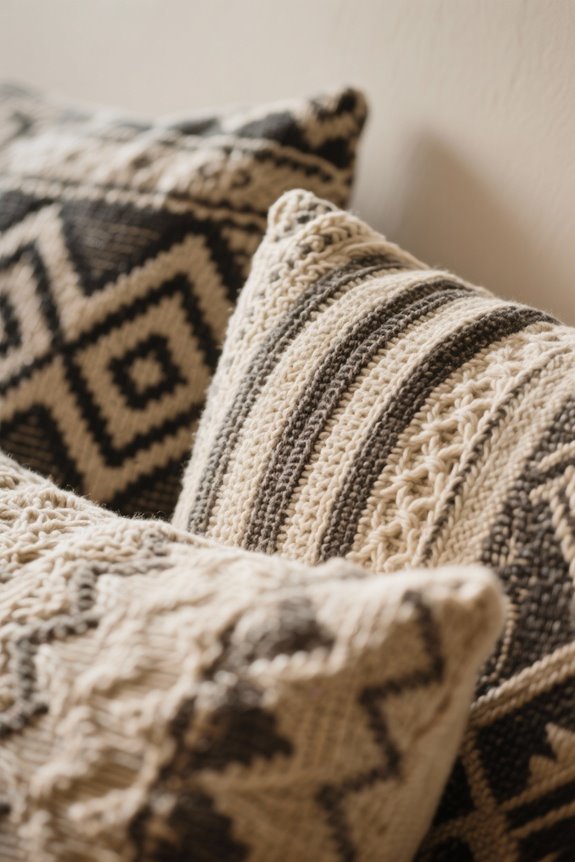
When creating a stylish pillow arrangement, understanding proportions, sizes, and arrangement techniques is key. Following the 60/30/10 rule helps. Use pillows proportion: 60% should be a big pattern, 30% a secondary design, and 10% for accents. Using sizes variation is important too. Mixing different sizes like 20×20 inches and 12×20 inches adds depth. Stick with various scales; larger patterns attract eyes, while smaller ones support them. Arranging pillows in odd numbers, like three or five, makes it visually interesting. Position pillows asymmetrically to create flow. Solid colors can anchor mixed patterns. Layering helps with depth. Following these methods leads to balanced and appealing pillow displays in your space. Additionally, consider incorporating a beige chunky knit blanket as a cozy element that complements your pillow arrangement. Simple steps can make a big difference.
Exploring Texture and Fabric Mix

Exploring texture and fabric mix is important for creating a visually appealing pillow arrangement. Different textures can add interest and depth. For example, smooth fabrics like silk can be paired with rough textures, like burlap or linen. This is known as fabric contrast. Using textured solids, such as chunky knits or faux fur, will keep pillows looking interesting without being too busy. Texture layering helps balance bold patterns. Textured pillows can break up the complexity of many prints. Fabrics like cotton and velvet mix well together. Also, using durable fabrics like canvas adds weight. The right mix of textures can enhance the overall look and feel of a space, making it cozy and engaging. Additionally, incorporating soft knitted throw blankets can further elevate the style and comfort of your decor.
Coordination Techniques for Pattern Mixing

Mixing different pillow patterns adds a lively touch to any space. To achieve coordination, start with color undertones that match the room’s decor. Build tonal stories using the 60-30-10 rule for visual balance. A pattern hierarchy helps to arrange pillow styles effectively. Combine large, medium, and small scales to maintain a clear visual flow. Use layering techniques to give depth, placing patterned pillows behind solids. Shape variety is essential; mix square and lumbar pillows for interest. Create dynamic arrangements by grouping pillows with odd numbers like three or five. Finally, guarantee rhythm harmony by mixing busy and calm patterns, so they complement each other without overwhelming the space. Just enjoy the process of mixing! Additionally, consider adding festive elements such as unique patterns to enhance the overall aesthetic of your decor.
Practical Tips for Styling Your Pillows
Practical tips for styling pillows can transform any furniture arrangement. Start with pillow placement. Use different sizes and shapes, like square and round pillows, for creating visual interest. Symmetrical balance techniques work well on sectionals or loveseats. Next, focus on texture mixing. Combine various materials such as velvet and cotton for depth. This will make pillows look more inviting. Color coordination is also important. Use a color scheme derived from an anchor pillow or room accents. Adding a pop of color can make the arrangement stand out. Finally, remember arrangement and layering techniques. Stack larger pillows at the back and smaller ones in front. Limit the number of pillows to avoid overcrowding and keep a clean look. Additionally, incorporating various design options can enhance the overall aesthetic of your pillow arrangement.
Seasonal Refresh: Updating Your Pillow Covers
Seasonally updating pillow covers is a smart way to refresh a room. Changing pillow covers can easily change the look and feel of a space. For spring and summer, choose bright floral prints and soft pastels like muted blush or sage green. These colors create a fresh vibe. In contrast, autumn and winter benefit from cozy textures like velvet in warm earthy tones. Colors like terracotta and ochre can provide comfort. Also, bold colors like deep navy or mustard can make strong focal points. Consider using geometric or playful patterns to maintain interest as well. By keeping in mind seasonal themes and color trends, anyone can create a stylish refresh that matches any time of year easily.
Common Mistakes to Avoid in Pillow Pattern Mixing
When it comes to mixing pillow patterns, there are common mistakes that can easily disrupt design harmony. Overloading patterns with too many distinct designs can create chaos. It often makes the space feel cramped. Ignoring cohesion in your color choices leads to mismatched colors and disrupts harmony. Neglecting scale is another issue. Using patterns of the same size can create a flat look. Overlooking texture can diminish visual interest too. Choosing pillow sizes that don’t fit well reduces depth in arrangements. Ultimately, failing contrast with too many high-contrast patterns can overwhelm the viewer. These mistakes can cause excessive fabric clutter and prevent a balanced effect. Keeping these tips in mind leads to a more cohesive pillow design.
Frequently Asked Questions
How Do I Choose Pillow Patterns for a Small Space?
To choose pillow patterns for a small space, one should select a cohesive color palette and appropriate pillow sizes. Combining subtle prints with bolder patterns guarantees visual interest while maintaining harmony and preventing overcrowding.
Can I Mix Pillows With Different Fabrics?
Yes, mixing pillows with different fabrics is effective. Thoughtful fabric combinations can create texture balance, enhancing visual appeal. By blending various materials, one achieves a layered look that adds depth and interest to decor arrangements.
What Colors Work Best With a Neutral Sofa?
Color palettes that complement a neutral sofa include earthy tones like rust and terracotta, soft blues, and warm accent hues. Layering various shades enhances visual depth while maintaining an inviting, cohesive atmosphere in the living space.
How Often Should I Change My Pillow Covers?
Changing pillow covers at least once a week maximizes frequency benefits, particularly during seasons with sweat accumulation. Individuals should adapt washing schedules based on personal hygiene habits and skin sensitivity to guarantee ideal cleanliness and health.
Are There Specific Patterns That Are Timeless?
Timeless designs often feature classic patterns like stripes, florals, and geometric shapes. These enduring motifs, particularly in neutral colors and quality fabrics, guarantee versatility and long-lasting appeal in various interior decor styles.
Conclusion
Ultimately, creating engaging cushion combinations can be simple. Start with a strong color scheme for a sophisticated look. Then, explore different patterns to achieve a balanced blend. Pay attention to size and arrangement for an appealing aesthetic. Mixing textures and fabrics can enhance your design, too. Finally, remember practical tips, like updating seasonally. Avoid common mistakes, and you will achieve a delightful display of decorative pillows that adds character to your space.


