As an Amazon Associate, we earn from qualifying purchases. Some links may be affiliate links at no extra cost to you. Although our opinions are based on curated research, we haven't used these products. Articles generated with AI.


Is It Safe To Machine Wash Knitted Throw Blankets?

Machine washing knitted throw blankets can be safe, but you need to be careful. Check the care label first. Use a gentle cycle and cold water to avoid shrinking. A mesh bag helps protect the fibers during washing. Avoid high spin speeds and wash them separately from heavier items. If not washed properly, wool can shrink and other fibers can stretch. To learn more about drying and extra care for your blankets, keep going.
Key Takeaways
- Check care labels to determine if the knitted throw blanket is machine washable or requires hand washing for proper care.
- Use the gentle cycle and cold water (below 30°C) to minimize the risk of shrinking or damaging the fibers.
- Place the blanket in a mesh laundry bag to protect it from friction and wear during the wash cycle.
- Avoid washing knitted throws with heavier items to prevent stretching and distortion of the fibers.
- After washing, lay the blanket flat to dry, avoiding hanging, which can lead to unwanted stretching.
Understanding Care Labels and Material Considerations
You may be interested


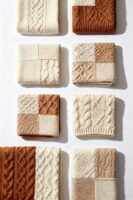
How important is it to check care labels on knitted throw blankets? It is very essential. Care labels provide important information about fiber identification and washing frequency. They tell you if a blanket can be machine washed or needs hand washing. Knowing the fiber type helps in choosing the right washing method. For example, natural fibers like wool need gentle care to prevent shrinking or felting. In contrast, synthetic fibers like acrylic can handle machine washing better. If washing frequency is not correctly followed, there may be risks of damage, like pilling or color bleeding. Ignoring these labels can lead to big problems. Additionally, selecting the right moisture-wicking properties can enhance the longevity and comfort of your blankets. So, always check the care label before cleaning any knitted throw blanket.
Recommended Machine Washing Settings and Techniques

After checking the care labels and understanding the material of knitted throw blankets, it is time to focus on the machine washing settings and techniques. Use the gentle cycle to reduce agitation on the knit fibers. This is important for maintaining their shape. Set the machine to cold water, below 30°C or 86°F, to prevent shrinking and color bleeding. Avoid high spin speeds; a slow spin or no-spin setting is best. Place the blanket inside a mesh laundry bag to protect it from friction. Use mild, wool-safe detergents, not harsh powders or fabric softeners. Always wash knitted throws separately from heavier items. This will help avoid stretching and keep your blanket looking great after each wash. Additionally, always consider high-quality fabrics to ensure your blanket endures multiple washes without damage.
Risks and Potential Damage From Improper Machine Washing

What should be considered when washing knitted throw blankets in machines? Risks of improper washing can be significant. For instance, wool-knit blankets often shrink if washed in hot water. Shrinkage prevention is vital since it can alter the blanket’s size and shape forever. Cotton and synthetic blankets are less prone to shrink, but they can still stretch and distort. Machine agitation can stress fibers, leading to fiber damage or pilling. Heavy blankets may cause issues in the washing machine, creating noise and wear. As a result, selecting the right cycle is important for fiber protection. Additionally, always check care labels to avoid mishaps. Using proper techniques and settings gives knitted throw blankets a better chance at staying beautiful and intact, especially considering the machine washability of many popular chunky knit blanket options.
Alternatives and Additional Care Recommendations

When considering the care of knitted throw blankets, there are alternatives to machine washing. Spot cleaning is effective for small stains. It helps to maintain the blanket’s quality without frequent full washings. For regular maintenance, gentle brushing can keep the fibers fluffed and looking nice. Proper blanket storage is also important; keep them folded in breathable bags to avoid dust and mildew. Avoid sharp objects or rough surfaces that could snag and damage the yarn. Always guarantee fiber protection by following cleaning recommendations based on the yarn type. These methods help preserve the blanket’s appearance and comfort over time while minimizing the need for more intensive care. Natural fibers like cotton and wool, when used in blankets, contribute to overall breathability and comfort.
Drying Guidelines Post Machine Wash
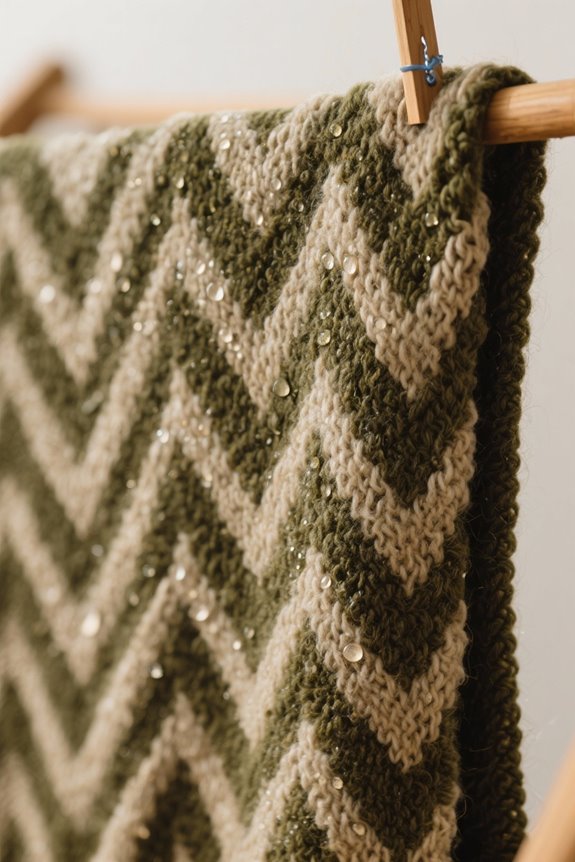
To guarantee that knitted throw blankets dry properly after machine washing, it is important to follow specific guidelines. First, lay the blanket flat on a clean, moisture-resistant surface for drying. Avoid hanging it to prevent stretching. Use a drying rack or a towel underneath to help with moisture removal. Rotate or reshape blankets occasionally while drying to keep their shape. Dry them at room temperature and avoid high heat sources like direct sunlight. It may take 24-48 hours for complete drying, depending on thickness. Make sure to check regularly and avoid folding until fully dry to prevent musty odors. Good air circulation also helps. Additionally, opting for machine washable options ensures that maintenance is simple and convenient. Plan drying after washing when humidity is low for best results.
Special Considerations for Types of Knitted Throw Blankets
How can different types of knitted throw blankets affect washing methods? Different materials influence how blankets should be washed. Chunky knits often can be machine washed safely but need gentle cycles. To avoid damage, it’s best to use cold water and low spin speeds. On the other hand, delicate fabrics like cashmere and fine wool require extra care. These materials often prefer hand washing to keep their shapes. Blended fibers work better in machines, often labeled as safe. Users should consult the care label for specific instructions. Always protect embellishments by placing blankets in mesh bags. Following these guidelines helps maintain the beauty and functionality of knitted throw blankets for many years. Additionally, many chunky knit blankets made from hand-woven chenille allow for machine washability, making them more convenient for everyday use.
Frequently Asked Questions
Can I Use Fabric Softener When Washing Knitted Throw Blankets?
Using fabric softener on knitted throw blankets can weaken fibers and reduce durability. Experts recommend fabric softener alternatives like wool-safe detergents or natural options, ensuring proper care to maintain the blanket’s integrity and softness.
How Often Should I Wash My Knitted Throw Blanket?
Knitted throw blankets typically require washing every few months as part of a maintenance routine. Adhering to care instructions is essential to prevent damage, with spot cleaning and airing out extending intervals between washes considerably.
What Should I Do if My Blanket Shrinks?
Like a puzzled puzzle piece, a shrunken blanket can be restored by gently stretching it back into shape. To prevent shrinkage, always wash using cold water and lay flat to dry, preserving its cozy form.
Can I Bleach My Knitted Throw Blanket for Cleaning?
Bleaching knitted throw blankets is discouraged due to potential fiber damage. Instead, one should consider bleaching alternatives, such as mild detergents and gentle stain removers, ensuring proper fabric care to maintain the blanket’s integrity.
Is It Okay to Wash Knitted Blankets With Other Household Items?
Washing knitted blankets with other household items is generally not advisable. Proper washing techniques and laundry precautions, such as using a mesh bag and separating fabrics, help prevent damage to delicate fibers and maintain blanket integrity.
Conclusion
To sum up, machine washing knitted throw blankets can be safe if done correctly. Always check the care label for specific instructions. Use gentle settings and cold water. However, be cautious of risks like shrinkage or damage. Think of it like washing a wool sweater—delicate and needing care. If unsure, hand washing is safer. For drying, air-drying is best. Following these guidelines can help keep your blanket looking great for many cozy nights ahead.


