As an Amazon Associate, we earn from qualifying purchases. Some links may be affiliate links at no extra cost to you. Although our opinions are based on curated research, we haven't used these products. Articles generated with AI.

How To Spot Quality In Knitted Products?

To spot quality in knitted products, look at several factors. Check the elasticity and shape recovery; good fabrics return to shape after stretching. Assess the fabric density by counting stitches; higher density means better durability. Examine color fastness with tests for fading and pilling resistance. Finally, consider thermal insulation and how well air moves through the fabric; this affects comfort. Knowing these features helps pick a quality knitted item. More details can help you understand it better.
Key Takeaways
- Check elasticity by stretching the fabric; quality knitted products should recover well without deformation.
- Examine stitch density; higher wales and courses per unit length indicate better durability and stability.
- Assess surface smoothness; fine yarns and tight stitching usually result in a smoother finish.
- Test color fastness with ISO or AATCC methods; a score of 4 or above shows high-quality color retention.
- Evaluate pilling resistance; fewer pills on the surface indicate better fabric longevity and quality.
Evaluating Elasticity and Shape Recovery
You may be interested


Evaluating the elasticity and shape recovery of knitted products is an important step for quality assessment. Elasticity testing helps to understand how fabrics stretch and how well they return to their original shape. Knitted fabrics are unique due to their looped structure. This structure allows them to extend under pressure and then recover when released. However, elasticity can vary in different directions. The course direction usually stretches more than the wale direction. Yarn type also plays a big role. Elastic yarns like spandex improve shape recovery. Testing standards, like ASTM D2594, guide proper evaluation. Testing involves stretching the fabric, waiting, and measuring how well it returns. These factors guarantee long-lasting and well-fitting knitwear. Additionally, the quality of fleece lining can significantly affect the warmth and overall comfort of knitted products.

T-shirt Yarn: Each roll of yarn weighs 800 g / 28.2 oz, 208 m / 228 yds long, line width of 3 cm, the yarn is thicker for easy knitting, 5-7mm crochet hooks are recommended, Supplied with a 5.5mm crochet hook.

T-shir Yarn Size : This roll of yarn weighs 800 g/28.2 oz, 208 m/228 yds long, 3 cm thread width, recommended crochet hook: 5.0-7.0 mm, one 5.5mm crochet hook is provided for free.

EXCELLENT QUALITY: The crochet yarn is made of 95% polyester fiber and 5% spandex fiber, the excellent quality of the production materials make the yarn for crochet fabric is not only more durable, smoother, more elastic, but also has excellent stretch
Assessing Fabric Density and Surface Smoothness

Understanding fabric density and surface smoothness is important in evaluating knitted products. Stitch density measures loops in a knit fabric. It is shown as wales and courses per unit length. Higher stitch density usually means better durability and stability. Tools like pick counters and smartphone apps can help measure this accurately. Also, fabric smoothness relates to yarn type and stitch tightness. Smooth surfaces look better and feel nicer against the skin. Fine yarns with high stitch density tend to create a smooth surface texture. Automated systems can detect surface flaws, helping guarantee quality. Additionally, moisture-wicking properties are crucial for maintaining comfort in knitted products. The right balance of density and smoothness is key for how the fabric performs and feels in everyday use.

▶TEMPORARY STABILIZER: It provides temporary support for embroidery projects. They are best used on firmly woven fabrics and fabrics made from natural fibers. Our tear away embroidery stabilizer can be torn away easily yet provides adequate stability.

Versatile Acrylic Yarn: Crafted from 100% premium acrylic, our RED HEART Super Saver Jumbo yarn is perfect for a variety of knitting, crocheting, and crafting projects.

A luxuriously soft, chenille-style yarn that's perfect for baby blankets and garments.
Checking Color Fastness and Pilling Resistance
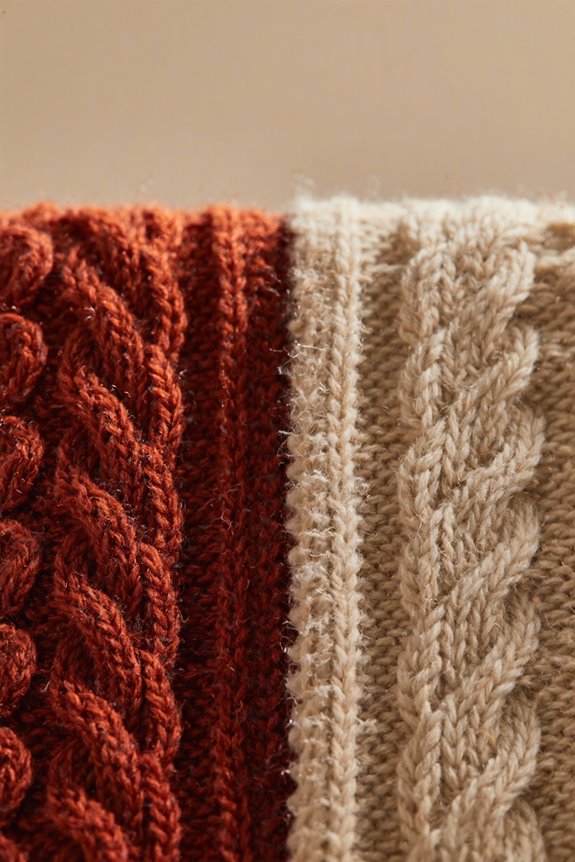
How can one guarantee a knitted product will keep its color and resist wear? One way is through color testing, which includes methods like ISO 105 C06 and AATCC 61. These tests check color fastness during washing. Fabrics that score a 4 or above on a scale are generally high quality. Next, testing for fading resistance under light is essential, as some fabrics fade more easily than others. Colors like emerald and navy blue often struggle with this. Pilling, or the formation of small balls on fabric, should also be checked. Fiber dyeing techniques matter here. Deep dyeing helps with color retention and reduces pilling, ensuring a long-lasting knitted product. Additionally, material quality evaluation is vital when selecting sweaters to ensure durability and comfort.

Includes 6 balls of 24/7 Cotton Yarn Camel Factory Pack with 1 Craft Project Bag; A perfect Yarn for all kniting and crocheting projects

With the multiple colors to choose from, you can create beautiful and colorful tie-dye, ombre, dip dyed, marbled, or shibori patterns on clothing, shoes, accessories, and home décor!

Formulated Especially For - Silk, wool, feathers, nylons, and other protein fibers, Jacquard Acid Dye ensures vibrant, long-lasting colors
Understanding Thermal Insulation and Air Permeability

Thermal insulation and air permeability are important aspects of knitted products. These features determine how well a fabric retains warmth and lets air pass through. Thermal properties are measured using tools like the guarded hot plate test. This test helps find out how good a fabric is at keeping heat in. Higher thermal resistance means better insulation. Additionally, the composition of materials, such as soft Merino wool, greatly influences thermal insulation and moisture-wicking properties. Air permeability is about how easily air moves through the fabric. Good moisture management helps keep the skin dry and comfortable. Fabrics with more space between fibers allow for better air flow. Knitted items with special fibers, such as UHMWPE, can improve both insulation and breathability. This makes them better for activities where comfort is key.
Analyzing Manufacturing Parameters and Quality Grading
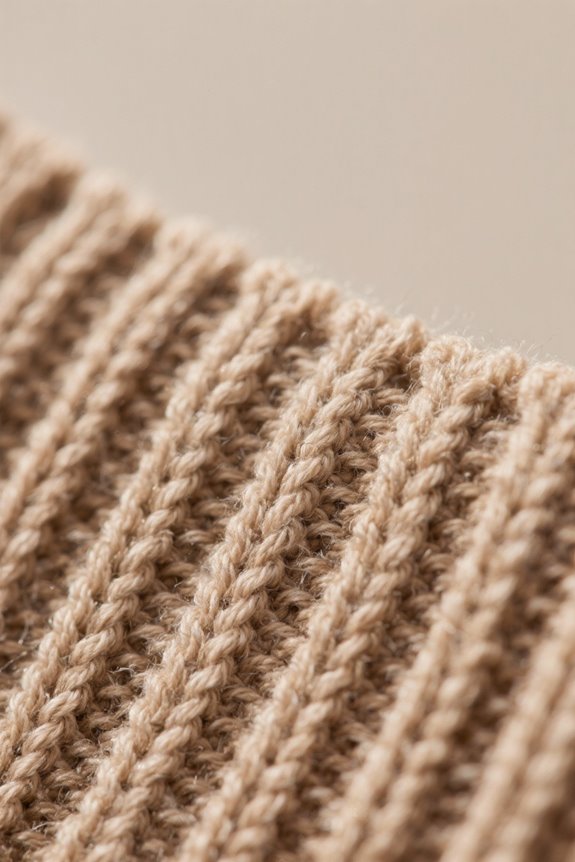
Knitted products’ quality depends on many factors, including manufacturing parameters and grading. Yarn composition plays a significant role in overall quality. Different fibers, such as natural versus synthetic, affect properties like softness and durability. Additionally, the kinds of stitch types used, like ribbing or cable, influence the texture and elasticity of the fabric.
Manufacturing details like yarn count and gauge are also essential. A consistent yarn count guarantees an even fabric, while gauge affects how dense the fabric is. Quality grading helps create multiple sizes by adjusting stitch counts accurately. So, using proper yarn composition and stitch types, along with careful grading, helps guarantee high-quality knitted products that fit well and last long. Furthermore, selecting high-quality yarns, such as A-Grade cashmere, ensures a luxurious feel and enhanced durability in knitted garments.
Frequently Asked Questions
How Does Knitting Technique Affect Overall Fabric Quality?
Knitting techniques greatly influence overall fabric quality through factors like knit tension and stitch type. Precise control of these elements enhances dimensional stability, mechanical properties, and visual appeal, ultimately shaping the durability and comfort of the finished product.
What Should I Look for in a Fabric Inspection Report?
In a fabric inspection report, one should examine fabric composition and stitching details; for instance, a report revealing inconsistent thread tension might indicate potential unraveling in production, highlighting the importance of thorough quality assessment for durability.
Can I Rely Solely on Brand Reputation for Fabric Quality?
Relying solely on brand reputation for fabric quality is unwise; variations in fabric specifications can exist even within established brands. Independent testing of fabric properties offers a more accurate assessment of quality than brand reliability alone.
How Do Environmental Conditions Impact Knitted Fabric Performance?
Environmental conditions dramatically alter knitted fabric performance; temperature effects and humidity influence lead to significant variations in thickness, durability, and microfibre release, underscoring the intricate relationship between fabric integrity and external elements.
What Is the Lifespan of High-Quality Knitted Products?
High-quality knitted products can last several decades if maintained properly. Durability factors include material choice and construction, while maintenance tips, such as careful washing and air-drying, greatly extend garment longevity and reduce environmental impact.
Conclusion
In conclusion, spotting quality in knitted products involves careful consideration. First, check for elasticity and shape recovery. Next, assess fabric density and surface smoothness. Color fastness and pilling resistance are also important. Don’t forget to understand thermal insulation and air permeability. Finally, analyze manufacturing parameters and quality grading. By following these guidelines, shoppers can make smart selections and secure superb garments. Quality in knitted goods leads to lasting satisfaction and stylish success.