As an Amazon Associate, we earn from qualifying purchases. Some links may be affiliate links at no extra cost to you. Although our opinions are based on curated research, we haven't used these products. Articles generated with AI.

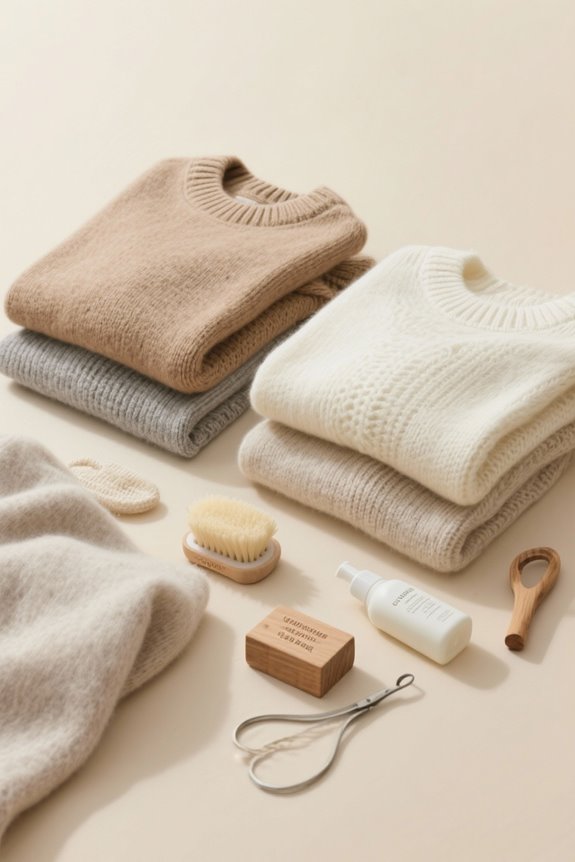
How To Care For Cashmere And Wool Sweaters?

To care for cashmere and wool sweaters, wash them gently in cold water. Hand washing lets you control the process better. Use mild detergent for delicate fibers. Soak for 15-30 minutes, then rinse well. Dry sweaters flat, reshaping them to maintain their original size. Store in cool, dry places, and use breathable cotton bags. Inspect for pilling and remove it with a cashmere comb. There’s more to learn about preservation tips and best practices for these fabrics.
Key Takeaways
- Wash cashmere and wool sweaters infrequently using cold or lukewarm water to minimize wear and tear.
- Hand wash gently for 15 minutes or machine wash on a delicate cycle with a mesh bag.
- Use a mild, pH-neutral detergent designed for delicate fibers to preserve their softness and color.
- Dry flat on a towel or mesh rack to maintain shape, avoiding hanging which can stretch fibers.
- Store folded in a cool, dry area with breathable bags to protect against pests and moisture buildup.
Importance of Proper Washing Techniques
You may be interested


Caring for cashmere and wool sweaters requires understanding proper washing techniques. One key aspect is washing frequency. It is best to wash these garments infrequently to avoid unnecessary wear and tear. The choice of water temperature is also important due to temperature sensitivity. Cold or lukewarm water is recommended to prevent shrinkage and felting. A mild, specialized detergent made for delicate fibers should be used. This helps maintain softness and prevent color fading. Remember to soak for no longer than 30 minutes. Gently agitating in water distributes detergent evenly without stressing the fibers. Rinsing until the water runs clear is essential. Correct washing techniques can prolong the life of sweaters, keeping them looking good for many seasons. Additionally, proper storage is essential to avoid damage during off-seasons.
Hand Washing vs. Machine Washing

When deciding between hand washing or machine washing cashmere and wool sweaters, it is important to understand the differences. Hand washing techniques offer more control. It uses cool or lukewarm water and gentle pH-neutral detergent. The sweater should be gently submerged without too much movement. It should soak for only 15 minutes. In contrast, machine washing is easier but has machine washing precautions. Sweaters should be turned inside out, and placed in a mesh laundry bag. It should be washed on a delicate cycle with cold water. Use a small amount of wool-safe detergent. Mixing with heavy items and overloading should be avoided. Both methods require caution to stop shrinkage or damage to the delicate fibers. Additionally, proper care is crucial for maintaining the appearance and performance of wool accessories, ensuring continued softness and insulation properties.
Drying Methods to Preserve Sweater Shape

Drying cashmere and wool sweaters properly is essential to keep their shape. The best method is flat drying. Lay the sweater on a clean, dry towel or a mesh drying rack. This helps avoid any stretching. Before drying, reshape the sweater gently to its original size. It’s important to avoid hanging because it can cause distortion and stretching of the fibers. You might want to roll the sweater in a towel first to soak up extra water. Always keep the fabric spread evenly. Also, avoid heat and direct sunlight, as these can damage the fibers. Let the sweater air-dry in a cool, shaded spot. This keeps the fabric soft and prevents fading. Additionally, proper care for oversized sweaters ensures they maintain their shape and comfort over time.
Best Practices for Storage and Maintenance

Proper storage and maintenance of cashmere and wool sweaters is important to keep them in good shape. It is best to fold sweaters using proper folding techniques, as hanging can cause them to stretch. The folded sweaters should be placed in a cool, dry area. This helps to prevent mold and mildew growth. Avoid direct sunlight because it can fade colors. To protect them from pests, use storage bags with cedar chips or fabric that allows airflow. Always keep sweaters clean before storing. Inspect them regularly for pest activity. Additionally, only use breathable cotton bags to prevent moisture buildup, avoiding plastic bags that trap humidity. Following these basics will help keep cashmere and wool sweaters looking nice for longer. Consider using breathable cotton bags to safeguard against moisture, as recommended for maintaining quality in cashmere cardigans.
Strategies for Preventing and Removing Pilling

Taking care of cashmere and wool sweaters involves more than just proper storage. To avoid pilling, use pilling prevention techniques that protect the fibers. Always follow the washing instructions on the label. Use mild detergents for special fabrics to keep fibers strong. It helps to minimize friction; do not wear your sweaters with rough materials like denim. Gentle washing practices like hand washing are also important. Regularly inspect your sweaters for pilling issues, and treat them promptly to keep them looking their best.
For removing pilling, there are good combing techniques. A cashmere comb or clothing brush can help. Use slow, gentle strokes to remove pills without damaging the sweater. Electric fabric shavers are available for a quicker option. Lint rollers can help too for light fuzz. Regular care can keep your sweaters looking nice.
Understanding Fiber and Fabric Specific Care
Understanding the specific care for cashmere and wool sweaters is essential. Cashmere is soft and delicate. Its fiber characteristics mean it needs gentle handling. Wool, on the other hand, is more resilient but has material sensitivity to heat. Both types of fibers are special. Cashmere fibers can easily snag or break, while wool can shrink or felt if washed improperly.
When caring for these fibers, using mild detergents is best. Hand washing in cold water is recommended. Cashmere should be laid flat to dry. Wool must also not be hung when wet to avoid stretching. Always store both types folded to maintain their shape and protect them from damage. This will help keep sweaters looking good longer. Additionally, proper care ensures that the fibers maintain their softness and durability, enhancing the longevity of your garments.
Tips for Long-Term Preservation
Caring for cashmere and wool sweaters involves steps that can help guarantee long-term preservation. First, clean sweaters to remove dirt, oils, and sweat. Use mild detergent with cold water and avoid twisting. Keep sweaters flat while damp, reshaping them to maintain form. Divide sweaters into breathable containers to reduce friction and dust. Avoid plastic, as it traps moisture.
To enhance sweater longevity, use natural repellents like cedar blocks for pest prevention. Rotate your sweaters seasonally to avoid permanent creases. Store sweaters in a cool, dark, dry place, away from heat and light. Regularly check for pests and handle them quickly. Following these tips ensures your favorite sweaters remain beautiful and intact over time.
Additional Care Considerations for Cashmere and Wool
While cashmere and wool sweaters bring comfort and style, they require attention for their care. Proper washing is important. Hand washing with cold water and gentle detergent keeps the fibers soft. Users should consider a sweater rotation to give each piece time to breathe. It’s also good to control humidity in storage areas. Too much moisture can lead to mildew. When not worn, store cashmere and wool flat, not hanging. This helps avoid shape loss. Using moth repellents like cedar balls can protect them. Shake and air sweaters between seasons to maintain freshness. If pilling occurs, use de-pilling tools to keep the sweater looking nice. Following these care tips guarantees sweaters stay beautiful and last longer.
Frequently Asked Questions
How Often Should I Wash My Cashmere and Wool Sweaters?
The ideal frequency for washing cashmere and wool sweaters is no more than three times per season, unless visibly soiled or odorous. Airing out between wears can extend time between washes effectively.
Can I Use Bleach on My Wool Sweaters?
Using bleach on wool sweaters is highly discouraged due to severe damage it causes. Instead, consider bleach alternatives to preserve fabric integrity, avoiding color fading and maintaining the strength and appearance of the wool fibers.
How Can I Eliminate Odors Without Washing?
Desperate to avoid washing? Fear not! Odor removal techniques abound: sunlight, baking soda, and vinegar sprays await. With these fabric fresheners, sweaters can breathe, miraculously transforming from stinky to sublime without ever touching water.
Is It Safe to Iron Cashmere and Wool Sweaters?
Ironing cashmere and wool sweaters can be safe if proper techniques are used. Employ gentle steam alternatives and low heat settings to avoid damaging the fibers, ensuring the garments remain fluffy and intact without scorching risks.
What Environmental Factors Harm Cashmere and Wool Storage?
Humidity control and temperature fluctuations are detrimental to cashmere and wool storage, as excessive moisture fosters mold growth, while varied temperatures damage fibers, leading to degradation and loss of texture over time.
Conclusion
To summarize, caring for cashmere and wool sweaters is important for their longevity. Coincidentally, the same techniques work for both types of sweaters. Always hand wash or use a gentle cycle in a machine, and dry flat to keep their shape. Store them properly to avoid damage and remember to handle pilling carefully. With these simple steps, anyone can enjoy their favorite sweaters for longer. Following these guidelines helps guarantee sweaters stay soft and nice.


