As an Amazon Associate, we earn from qualifying purchases. Some links may be affiliate links at no extra cost to you. Although our opinions are based on curated research, we haven't used these products. Articles generated with AI.

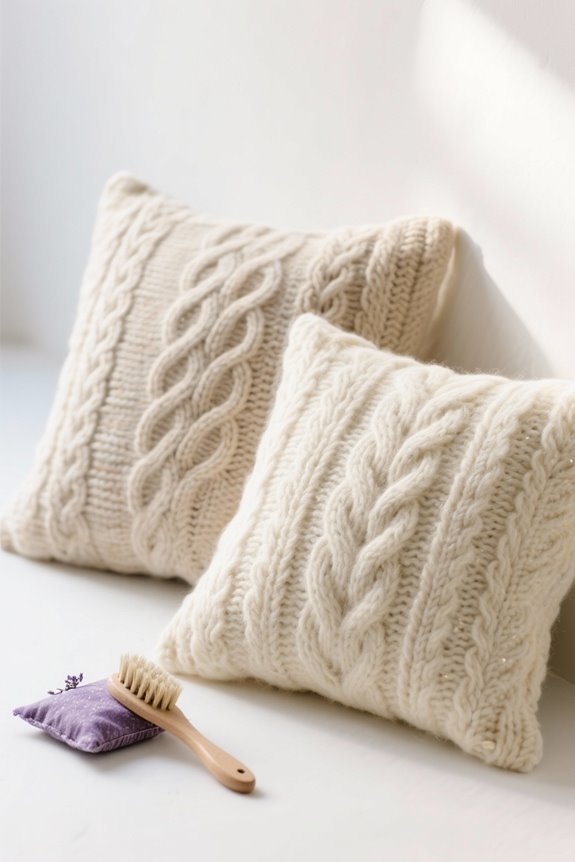
How To Care For Delicate Knitted Pillow Covers?

To care for delicate knitted pillow covers, always check the care labels before washing. Hand wash gently in cold water with mild detergent. Avoid wringing and lay flat to dry, reshaping while damp. Machine washing is okay if using a delicate cycle and cold water. Air drying is best; avoid direct sunlight. Regularly inspect for damage and store in a cool dark place. More tips to effectively maintain their condition follow this introduction.
Key Takeaways
- Always wash knitted pillow covers in cold water using a mild detergent to prevent shrinking and damage.
- Prefer air drying by laying covers flat on a towel to maintain their shape and integrity.
- For stains, pre-treat with eco-friendly solutions like baking soda or vinegar and test on a hidden area first.
- Regularly inspect for small damages and promptly repair any holes or snags with matching yarn.
- Store covers in a cool, dark place, ensuring they are completely dry to prevent mildew growth.
Understanding Care Labels
You may be interested


How does one properly care for knitted pillow covers? Understanding care label symbols is crucial. Care labels provide important information about fabric types. They tell if the pillow cover can be machine washed, or if you must hand wash or dry clean. Sometimes, they specify how to wash, like using cold water or a gentle cycle. Drying advice is also listed, which can say to lay flat or tumble dry low. Bleach symbols warn against using strong chemicals. Ironing instructions may suggest low heat or no ironing. Following these guidelines helps avoid damage to delicate fibers, preserves the cover’s shape, and guarantees it lasts longer. So, always take a moment to read those care labels! Additionally, knowing the material quality can significantly affect the preservation of your pillow cover’s texture and longevity.
Pre-Treating Stains Effectively
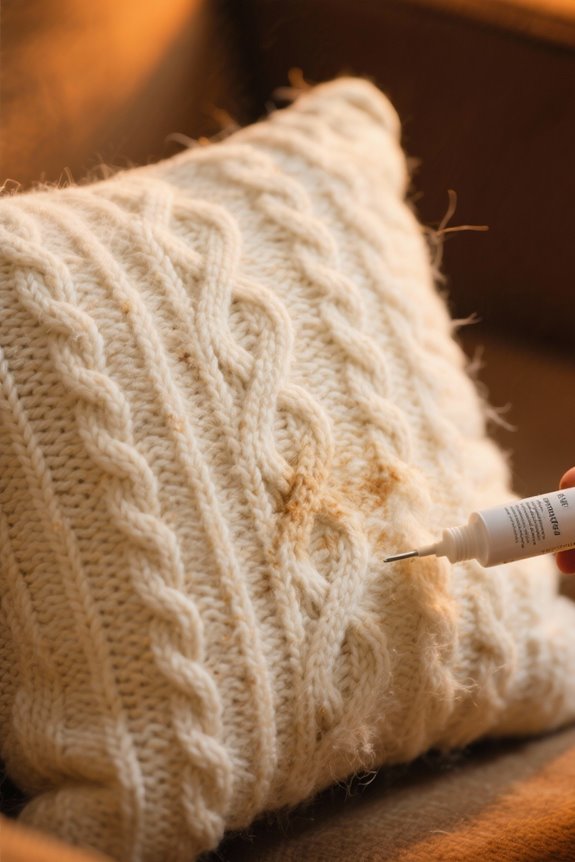
Pre-treating stains is an important step for maintaining knitted pillow covers. First, stain identification is essential. Knowing the stain type can help choose the right pre-treatment solutions. For example, use baking soda for sweat or white vinegar for organic stains. Gently blot the stain to remove moisture before applying any treatment. Eco-friendly solutions are better for delicate fabric. Test any solution on a hidden area first. Avoid harsh chemicals. To treat makeup stains, dab micellar water with a cotton ball. If the stain is set, mix hydrogen peroxide with a bit of dish soap. Let the pre-treatment sit for a few minutes. After pre-treating, handle the covers carefully to guarantee the best outcome and preserve their quality. Choosing materials like 100% cotton jersey knit can also enhance stain resistance and make cleaning easier.
Hand Washing Techniques
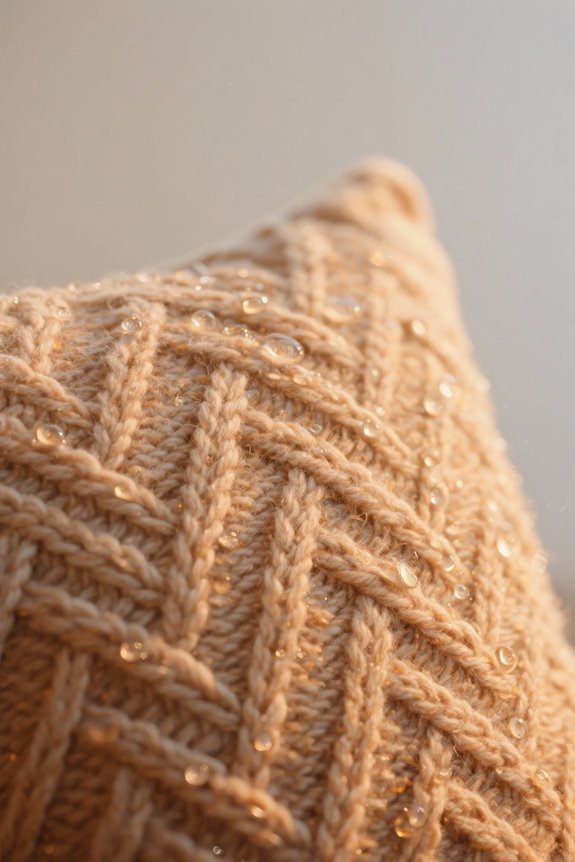
Washing knitted pillow covers by hand is a careful process that helps keep them looking good. It offers hand washing benefits, like preventing damage. Start by filling a clean basin with cold or lukewarm water. This helps avoid shrinkage. Add a mild, pH-neutral detergent designed for delicate fabrics. Soak the pillow cover gently to let the detergent work its magic. Use light motions to agitate the water while avoiding harsh rubbing. After a few minutes of soaking time, rinse thoroughly with cold water several times, ensuring all soap is removed. Gently press the cover against the basin’s side to remove excess water. This method protects the fibers, keeping your pillow covers in great shape for longer. Additionally, using machine washable options can help you maintain the quality of your knitted pillow covers more easily.
Machine Washing Guidance
When considering machine washing knitted pillow covers, several important steps should be followed for the best results. First, use cold water only. Hot water can cause wool and delicate fabric types to shrink or felt. Select the delicate cycle on the washing machine, which minimizes mechanical stress. If possible, use the shortest wash cycle to limit agitation. Machine washing precautions should include removing pillow inserts and zipping up any zippers tightly. Turn pillow covers inside out to protect them. Avoid washing with heavy items that shed lint. Check the care label to confirm washing instructions. Always be careful, as even with steps taken, there is a risk of damage to delicate knits during machine washing. Additionally, it is important to ensure that the material quality of the knitted pillow covers is compatible with machine washing.
Choosing the Right Detergent
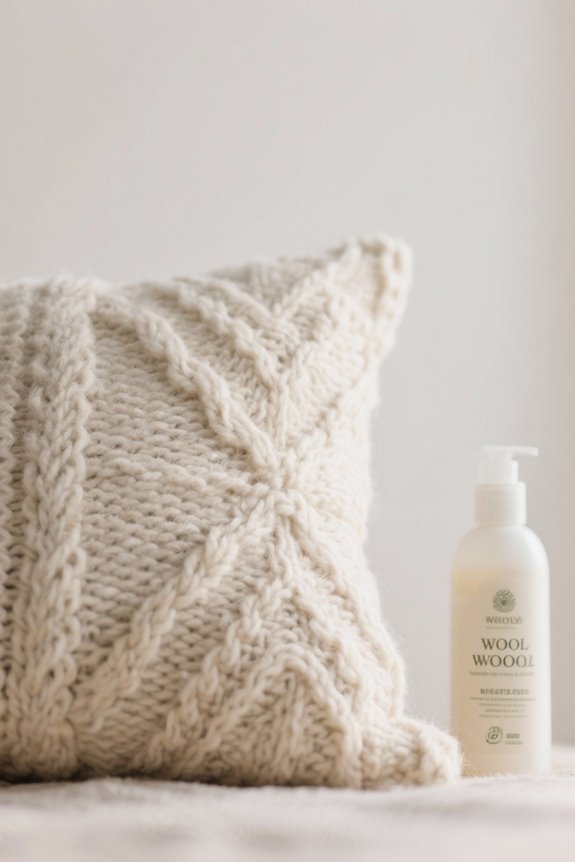
Choosing the right detergent for knitted pillow covers is very important. Detergent ingredients can affect delicate fibers, especially those made of wool and silk. It is best to use mild, pH-neutral detergents to avoid damage and color fading. Look for detergents labeled “gentle,” “for delicates,” or “wool/silk-safe.” Woolmark-approved mild detergents are good options. Avoid harsh soaps, enzymes, and bleaches, as they can weaken fibers and cause holes. Liquid detergents are often preferred because they dissolve easily and rinse out well. It protects the softness of the fabric. Be careful with additives like optical brighteners or heavy fragrances since they can be tough on fine yarns. Always follow usage instructions for best results. Using gentle detergents for delicate fibers ensures that the integrity of your knitted pillow covers is maintained over time.
Drying Methods for Delicate Fabrics
Caring for delicate knitted pillow covers requires careful drying methods. It is best to air dry these covers to protect their shape. Lay them flat on a clean towel or a mesh drying rack. This prevents stretching and warping, which can happen if hung. While still damp, reshape the fabric gently to maintain its size. Avoid direct sunlight to prevent color fading and fiber damage. Also, never use a machine dryer, as heat can weaken the fibers. Place flat-drying items in a well-ventilated area to help with air circulation. Keep them away from heaters or radiators. These steps guarantee longer life for knitted pillow covers while keeping them looking great. To enhance longevity, consider using high-quality materials similar to those found in premium throws for added durability.
Safe Storage Practices
Proper storage of knitted pillow covers is essential for keeping them in good shape. First, clean covers thoroughly and make certain they are completely dry to prevent mildew. For best storage, fold the covers neatly. Separate the covers by season or style to help with seasonal rotation. Clear plastic bins work well for visibility, while cotton bags allow airflow. Avoid vacuum-sealing pillow inserts, as this can damage them; jumbo bags with desiccant packs work better. Make sure to label containers so everything is easy to find. Store in a cool, dry place away from sunlight to prevent fading. Check the stored items for pests or mildew every now and then. Proper care can extend the life of knitted pillow covers.
Frequency of Washing
After ensuring that knitted pillow covers are stored correctly, attention turns to how often they should be washed. Washing frequency helps maintain the integrity of the fabric. For wool pillow covers in regular use, washing every two weeks is good. If not used often, washing once or twice a year is enough. For other knitted covers, washing every two to three months is often recommended. It is important to only wash them when visibly dirty, as dirt accumulation can influence the need for cleaning. Frequent washing can lead to stretching and fading. Airing out the covers can help reduce odors and dust, extending the time between washes. Spot cleaning stains is also useful to prevent frequent laundering.
General Care Tips
Maintaining knitted pillow covers requires specific practices to keep them looking nice and lasting longer. First, always check the care label for instructions about washing and drying. This helps prevent issues like shrinking and color fading. Spot cleaning stains is important before any washing. Use a mild, non-abrasive cleaner to protect the delicate texture. Hand washing is preferred. If using a machine, choose a gentle cycle with cold water. After washing, dry flat on a towel to preserve shape. Avoid hanging, as that can stretch the fibers. Store covers neatly to prevent deformation. Keep them away from damp places to dodge moth problems. With proper care, these covers can maintain their beauty and last longer.
Avoiding Common Mistakes
Knitted pillow covers require special attention during care, and avoiding common mistakes is important for maintaining their beauty and durability. One common pitfall is using hot water, which can shrink wool yarns. Instead, hand wash covers with mild detergents to prevent damage. Avoid wringing them, as it stretches the fabric. High heat drying is also not recommended. Air drying flat is the best practice to keep shape.
For closures, use hidden zippers or envelope styles to prevent damage. Secure seams tightly, as loose seams can unravel. When storing, avoid stacking covers or storing them in sunlight, which can weaken fibers. Regularly cleaning and airing out covers prevents odors. Following these guidelines helps preserve pillow covers effectively.
Maintaining Shape and Texture
Caring for the shape and texture of pillow covers needs attention. To maintain their form, use yarns with good elasticity techniques. This helps the fabric rebound after stretching. While knitting, it is important to keep a consistent gauge. Loose or tight areas can affect shape. Avoid pulling or stretching the fabric when handling. Reinforce edges with ribbing or tighter stitch patterns. This preserves structure at corners.
Washing is also important. Hand washing with mild detergent helps minimize stretching. Never twist or wring wet covers. Use cold water to avoid shrinkage. When drying, lay flat on a towel. This keeps the shape intact. Gently reshape to original dimensions after washing. Taking these steps helps maintain the beauty of knitted pillow covers.
Extending the Life of Your Pillow Covers
Taking steps to extend the life of pillow covers can make a big difference. Regular pillow rotation helps distribute wear evenly. This prevents certain spots from damaging faster. Flipping pillows also helps maintain their shape and reduces uneven compression. Both actions are simple damage prevention strategies.
Inspect covers often for small holes or snags. Fix minor damage quickly with matching yarn to stop holes from growing. Choosing removable covers, like those with zippers or buttons, allows easy washing, which preserves the pillow inserts.
Gentle cleaning is important too. Hand wash with mild detergent in cold water. Avoid wringing, as it can stretch fibers. Proper storage away from sunlight also helps keep colors bright and fibers strong.
Frequently Asked Questions
Can I Use Fabric Softener on Delicate Knitted Pillow Covers?
Using fabric softener on delicate knitted pillow covers is risky due to potential residue accumulation. Fabric softener alternatives, such as vinegar, may be better options, especially for sensitive knitting fiber types, maintaining softness without adverse effects.
How Do I Remove Pet Hair From Knitted Pillow Covers?
To remove pet hair from knitted pillow covers, one can conveniently use lint rollers, enhancing effectiveness with regular pet grooming. This combination minimizes hair accumulation and guarantees the integrity of the delicate fabric is maintained.
What Should I Do if My Pillow Cover Shrinks?
If a pillow cover shrinks, applying shrink remedies such as gentle washing in cold water followed by damp stretching can help restore its shape. Avoid high heat and reshape carefully while drying flat on a towel.
Are There Specific Drying Racks Recommended for Delicate Fabrics?
For delicate fabrics, mesh drying racks and cotton racks are recommended. Mesh designs promote airflow for efficient drying, while cotton racks offer gentle support, ensuring garments retain shape and avoid damage during the drying process.
How Do I Prevent Pilling on My Knitted Pillow Covers?
To effectively prevent pilling, individuals should employ pilling prevention techniques, such as opting for specific yarn choice considerations. Significantly, statistics reveal that 20% of knit fabrics experience pilling, highlighting the importance of fiber selection and care practices.
Conclusion
To sum up, caring for delicate knitted pillow covers is important to keep them looking their best. Following care labels and pre-treating stains helps prevent damage. Hand washing is gentle, while machine washing can be safe if done properly. Choosing the right detergent protects fibers. General care and avoiding mistakes will maintain shape and texture. With these tips, your pillow covers can stay beautiful and last longer, like a well-loved story told through the warmth of knit patterns.


