As an Amazon Associate, we earn from qualifying purchases. Some links may be affiliate links at no extra cost to you. Although our opinions are based on curated research, we haven't used these products. Articles generated with AI.


Tips For Styling Multiple Knitted Pillow Covers Together

To style multiple knitted pillow covers together, choose a color palette first. Use one main color with some supporting colors for balance. Mix different sizes and shapes of pillows. Larger pillows should go in the back. Add texture by combining soft and chunky fabrics. Use patterns carefully; mix large designs with smaller ones for interest. Arrange pillows in odd groups. These tips help create a cozy and inviting look. More ideas on this topic follow.
Key Takeaways
- Choose a cohesive color palette and follow the 60-30-10 rule to create a balanced visual display with your knitted pillows.
- Mix large and small-scale patterns, ensuring subtle patterns complement a dominant one for a harmonious look.
- Layer different textures, combining chunky knits with smooth fabrics to enhance depth and tactile interest in your pillow arrangement.
- Incorporate various pillow sizes and shapes, placing larger pillows at the back and smaller ones in front for an engaging layout.
- Arrange pillows in odd numbers for a more natural effect, mixing textures and patterns for visual appeal and inviting comfort.
Color Coordination and Palette Selection
You may be interested


Color coordination is important for creating visually pleasing knitted pillow covers. A cohesive color palette improves color harmony across a grouping of pillows. To achieve this, one can choose a dominant color and complement it with either analogous or complementary colors. Neutrals like beige and gray are great anchors for bolder tones. It’s also helpful to take into account color temperature; warm colors can energize a room while cool ones add calmness. The 60-30-10 rule is effective—60% dominant, 30% secondary, and 10% accent. Using different shades of one color brings subtlety. Vibrant, contrasting colors can create excitement. A balanced palette brings positive effects; taking into consideration color psychology in style choices can enhance the feel of the entire space, too. Additionally, utilizing neutral tones from popular choices such as grey can provide versatility and blend well with various aesthetics.
Pattern Mixing and Scale Balancing
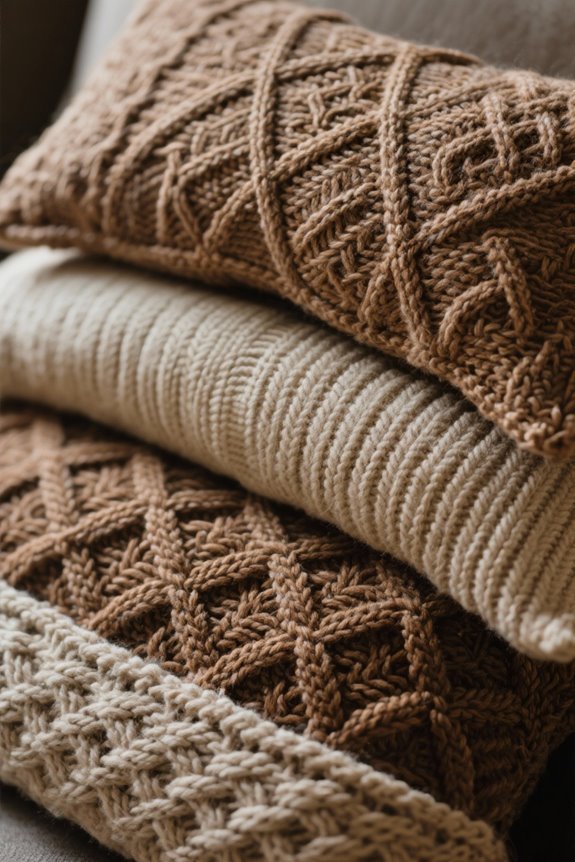
When it comes to designing knitted pillow covers, mixing patterns can greatly enhance the overall look of a space. To achieve proper pattern hierarchy, one dominant pattern should be paired with smaller, subtler patterns. This keeps the visual balance without overwhelming the viewer. Avoid placing multiple bold patterns together; instead, incorporate neutral colors to tone down high contrast. Mixing large and small-scale patterns adds depth. Large patterns can be focal points, while small ones serve as accents. Limiting the types of patterns to three or fewer maintains style cohesion. Finally, use a mix of genres, like stripes and florals, to create an eclectic feel. Always consider how patterns fit together within the room’s style and function, and remember that the choice of materials, such as premium acrylic fibers, can enhance both comfort and aesthetic appeal.
Texture and Material Layering
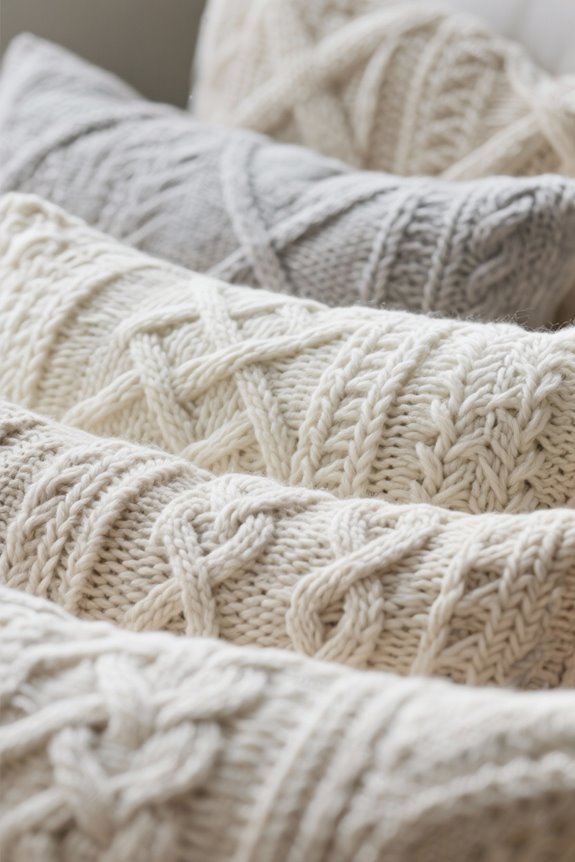
Texture and material layering is essential for creating visually appealing knitted pillow covers. Using different textures adds depth and interest. For example, combining chunky yarns with smooth, fine yarns introduces a pleasing texture contrast. This enhances the design and makes pillows cozy. Variety in materials is also important. Blending natural fibers like wool with synthetic ones like acrylic can add warmth and durability. Incorporating surface techniques helps too. Cable knits and ribbing patterns create unique visual effects. Openwork stitches can add airy relief over denser knits. The balance of rough and smooth materials, like pairing velvet with chunky knits, can provide engaging dimension. Overall, texture and material layering makes knitted pillows more inviting and stylish. Additionally, considering the material and fabric weight of your yarn choices can significantly enhance the overall comfort and appearance of your pillows.
Size and Shape Variety

Creating an interesting arrangement of knitted pillows involves more than just textures and materials. Size variety is key to enhance visual interest. Combining different sized pillows, like small 12×12″, medium 16×16″, and large 20×20″, adds depth. Larger pillows should sit at the back while smaller ones come forward for graduated sizing. This helps avoid a boring look, giving visual rhythm. Proportional sizing matters too; it should relate to furniture or available space. Playful shapes, like rounds and bolsters, make arrangements dynamic. Non-traditional shapes bring elegance and break symmetry. Knitting techniques can adjust for these shapes, ensuring they hold form. Overall, size and shape variety is essential for a well-styled, inviting pillow collection. Additionally, choosing pillows made from various materials like luxurious fibers can amplify comfort and aesthetic appeal.
Coordinated Assembly and Closure Techniques
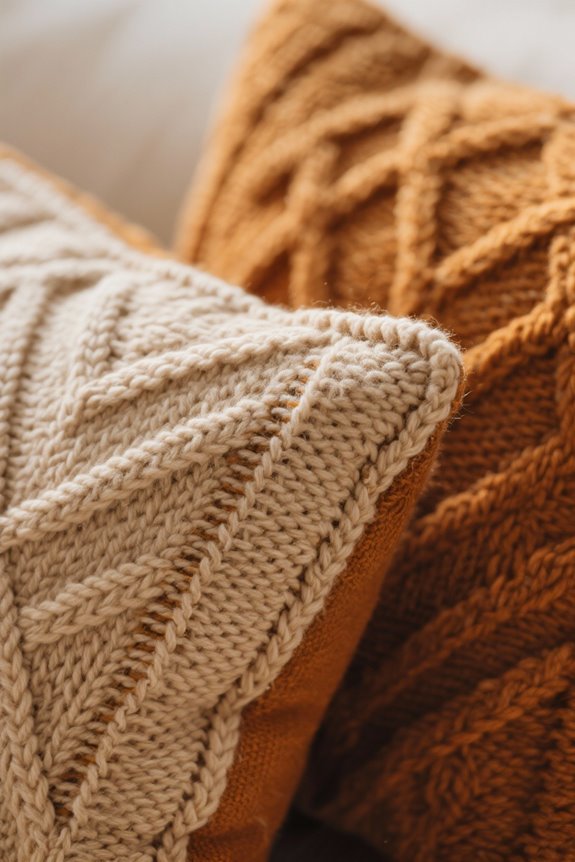
Coordinated assembly and closure techniques are vital for a polished finished look of knitted pillow covers. First, using the right seam techniques is essential. It’s best to align the front and back fabrics with their right sides together. This guarantees clean edges. Different closure options exist, like button tabs or envelope styles, for easy pillow insertions. Each choice enhances visual appeal and performance. When assembling, use quality yarn for durability enhancements. Color matching helps your finishing touches blend well. Edge finishes can add a polished look, so consider slip stitching or crochet. If using fabric backings, verify to hem them properly before assembly. They improve structure and reduce wear. Additionally, consider the material quality of your yarn to ensure lasting durability. Always keep everything neat for the best results.
Styling Arrangement and Display Tips
After assembling knitted pillow covers with attention to seams and closures, the arrangement of these pillows can greatly influence the room’s look. To start, larger pillows should be the base layer, placed at the back. Then, add medium-sized pillows in front for gradual depth. Finally, small pillows can fill gaps and add accents. It is important to use odd numbers, like three or five, for a more natural grouping effect. Mixing textures also enhances the display. Try using cables with ribbing or chunky knits to keep it interesting. Remember that pillow placement matters too! Symmetrical arrangements create a formal feel, while asymmetrical clusters give a relaxed vibe. Follow these grouping techniques for a pleasant display, and consider using multiple textures, like soft knit materials, to add comfort and visual interest.
Seasonal Color Introductions
When looking to introduce seasonal colors into knitted pillow covers, it is essential to take into account the current trends for that season. In Spring 2026, soft pastels like lavender and blush pink are popular. They can mix well with deeper shades. Earthy warm tones like terracotta and mustard shine in Autumn 2026. These colors add cozy depth to your space. Color trends also favor warm metallics like gold and bronze, which provide a touch of luxury. Black accents are trending too, giving a modern edge. For all pillow arrangements, seasonal introductions should be balanced. This way, the colors do not clash and create an inviting atmosphere in your home. Using these ideas will help refresh your decor effectively.
Accent and Neutral Hue Balance
Introducing accent and neutral hues into pillow cover arrangements is important for creating a balanced look. The neutral base consistency, such as shades of beige or gray, forms a strong foundation. These colors help highlight the accent hue placement. It is a good idea to use 60% neutral pillows, 30% in a supporting color, and 10% in bold accent colors. This mixture prevents visual clutter. Choosing the right neutrals to match the room’s lighting is essential. Warmer tones work well in shaded areas while cooler tones fit sunny spaces. Multiple neutral shades can add depth when layered correctly. Accent colors should complement neutrals, creating harmony without clashes that can upset the visual setup. This method helps maintain style coherence.
Visual Harmony Through Existing Patterns
Creating visual harmony through existing patterns is key for a pleasing pillow arrangement. To achieve visual consistency, use repeated motifs or geometric designs across different pillow covers. This method helps create cohesion without making it dull. Balance complex stitch patterns with simpler ones to prevent visual overload. Consistent stitch gauge and yarn weight are also important to keep an even texture. Remember to repeat accent colors from one pillow in others. It strengthens visual ties. Different scales of patterns can also be mixed. But scaling should guarantee everything looks good together. By focusing on these aspects, one can create a well-coordinated set of knitted pillows that feels whole and thoughtfully designed.
Creating Tactile Contrast in Fabrics
Tactile contrast in fabrics plays an essential role in design, especially for pillows. Using different tactile textures can make pillows more interesting. For example, combining smooth, soft fabrics with rough, natural textures creates a nice feel. The surface roughness affects how fabrics are touched and experienced. Thick fabrics give a sense of weight, while thin fabrics feel lighter. Mixing fuzzy or napped surfaces with slick materials can enhance sensory engagement. Also, textured pillows can add warmth and depth. Layering fabrics with various compressibility makes the touch experience richer. Overall, choosing a variety of textures will invite people to engage with the pillows. The right contrast can make any space feel cozy and inviting, encouraging interaction.
Maintaining Proportionality in Arrangements
When using multiple knitted pillow covers, maintaining proportionality in arrangements is key for a balanced look. It is important to use pillows of different sizes, like 18×18, 20×20, and 24×24 inches. This creates visual interest. Larger pillows work well at the back, providing a sturdy base. Place medium and smaller pillows in front to enhance depth. Combining different shapes, such as square and rectangular, also aids in proportional balance. Verify patterns match the pillow size, with larger patterns on big pillows and subtle ones on smaller ones. Spatial awareness is essential; arrange pillows with enough space so they do not crowd. Gradations of color can create harmony, supporting the overall feel of balance in the arrangement.
Frequently Asked Questions
How Do I Choose the Right Yarn for My Knitted Pillow Covers?
To choose the right yarn for knitted pillow covers, one should consider yarn types like wool for durability or cotton for breathability. Additionally, thoughtful color selection enhances the aesthetic appeal and complements existing home decor.
Can I Mix Knitted Pillows With Non-Knitted Decorative Cushions?
Why confine decor to a single texture? Mixing knitted pillows with non-knitted cushions can create an inviting space. Incorporate vibrant knit patterns and employ clever color blocking to elevate aesthetic charm and visual interest.
What Tools Do I Need for Knitting Pillow Covers?
To knit pillow covers, one needs knitting needles appropriate for the yarn, measuring tape for accurate sizing, yarn scissors for clean cuts, stitch markers for tracking, and a pattern book for design guidance.
How Do I Maintain the Shape of Knitted Pillow Covers?
Ironically, one might think pillow stuffing guarantees shape preservation. However, gentle hand washing, flat air drying, and careful storage are essential for maintaining the integrity of knitted pillow covers, avoiding the mishaps of stretching and deformation.
What Are Some Common Mistakes to Avoid in Pillow Styling?
Common mistakes in pillow styling include ignoring pillow proportion and allowing color clash. Sticking to unified textures, varied sizes, and complementary hues guarantees a balanced, inviting aesthetic while avoiding cluttered or monotonous decor that lacks visual interest.
Conclusion
To sum up, styling multiple knitted pillow covers is an art form. It needs careful attention to color and texture. You must mix patterns boldly and choose various sizes and shapes. Balance is very important. Maintaining harmony can make or break your display. Using contrasting fabrics creates exciting interest. Mastering all these techniques can seem impossible, like juggling flaming torches while riding a unicycle. However, with practice, your pillows can truly become a stunning and cohesive statement piece in any room.


