As an Amazon Associate, we earn from qualifying purchases. Some links may be affiliate links at no extra cost to you. Although our opinions are based on curated research, we haven't used these products. Articles generated with AI.


How To Care For Delicate Knitted Baby Clothes?

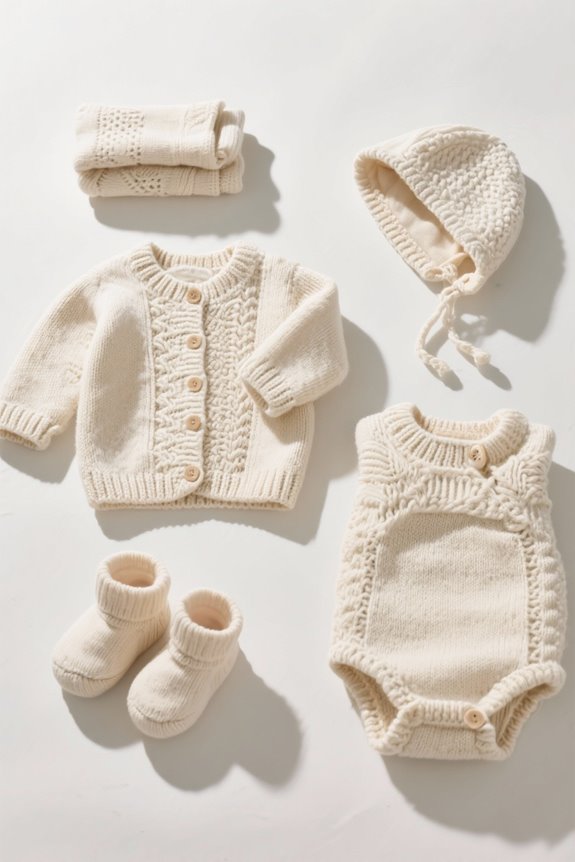
To care for delicate knitted baby clothes, hand wash in cool water using a mild detergent. Avoid harsh chemicals. Rinse gently and change water often until all soap is out. For washing machine, choose a gentle cycle and low-spin setting. Wash with similar soft fabrics. Lay items flat on a towel to dry. This helps maintain the shape and prevents stretching. Regularly check for loose threads and pilling to keep items in good condition. More tips await!
Key Takeaways
- Hand wash knitted baby clothes in cold or lukewarm water using mild, hypoallergenic detergent to preserve fabric quality.
- Avoid twisting or wringing; lay items flat on a towel or drying rack to maintain shape while air drying.
- Regularly inspect for loose threads or pilling, making timely repairs to extend the garment’s lifespan.
- Store items in breathable containers and ensure they are fully dry to prevent mildew or damage.
- Wash personalized items inside out and avoid bleach to protect prints and designs from damage.
Hand Washing Techniques
You may be interested


When caring for delicate knitted baby clothes, hand washing techniques are essential for keeping them in good shape. First, prepare by using a large basin or clean sink. Use a mild detergent designed for fabric care, avoiding any harsh chemicals. Inspect clothes for stains, and pre-treat them lightly. The actual washing process should be careful. Fill the basin with cool or lukewarm water. Submerge the garment fully, swishing gently to distribute detergent. Focus on soiled areas with fingertips, but do not rub harshly. Limit washing time to a few minutes to reduce stress on the fibers. Finally, rinse thoroughly until all detergent is gone. Remember, wash baby clothes infrequently to preserve their delicate fibers and extend their life. Regular washing using soft, lightweight materials can help maintain the shape and quality of baby clothes.
Recommended Water Temperatures

Proper water temperatures play a big role in caring for delicate baby clothes. The ideal temperature for most newborn garments is cold water, around 60-80°F (15-27°C). This method helps prevent shrinking and color fading. Washing with warm water, about 90-110°F (32-43°C), is good for heavily soiled items. However, some washing myths suggest hot water is best. It can damage fabrics and elastic fibers. Hot water can shrink clothes or fade bright colors. Most care labels suggest washing at 30-40°C (86-104°F). Choosing lower temperatures is also energy-efficient, which is great for the environment. Following these rules guarantees clothes stay soft and colorful while being safe for baby’s sensitive skin. Additionally, using machine washable options can enhance the longevity of delicate garments, ensuring they remain in great condition over time.
Safe Detergent Options

Choosing safe detergent options is important for caring for delicate baby clothes. Parents should consider natural detergents and hypoallergenic formulas. These products help reduce skin irritation and allergic reactions for babies. Natural ingredients, like plant-based surfactants and baking soda, are safer choices. Products with shorter ingredient lists are easier to evaluate. Brands like Molly Suds and Dapple Baby offer fragrance-free options. Nellie’s Laundry Soda is biodegradable and avoids harsh chemicals. Tru Earth provides hypoallergenic laundry strips, promoting sustainability. Branch Basics has effective formulas without harmful toxins. It’s wise to look for certifications like EPA Safer Choice or Leaping Bunny to verify safety. Remember, a good detergent removes stains without damaging fabrics or sensitive skin. Additionally, selecting detergents that maintain softness and durability is crucial for preserving the quality of delicate garments.
Avoiding Harsh Chemicals

Caring for delicate baby clothes means avoiding harsh chemicals that can harm both the baby and the environment. Many baby clothes contain harmful substances like formaldehyde and azo dyes. These chemicals can cause skin irritation and even serious health issues. Parents should choose natural alternatives, which are safer for babies and the ecosystem. Organic cotton and dyes made from plants offer better safety. Chemical awareness is important when selecting baby clothes. Fabrics treated with flame retardants or synthetic finishes may lead to long-term health risks. It is wise to read labels and understand the ingredients used in clothes. By avoiding harsh chemicals, caregivers help keep babies safe while protecting the planet for future generations. Additionally, opting for soft, natural fibers can enhance comfort and reduce the risk of skin sensitivity.
Gentle Machine Washing Guidelines

When it comes to washing delicate baby clothes, following gentle machine washing guidelines is critical for maintaining their quality. First, select the delicate or wool cycle for gentle agitation. This cycle protects the knitted fibers. Use cold water or water up to 30°C (86°F) to avoid shrinking. Always wash knitted clothes separately or with similar gentle fabrics. A mesh laundry bag can help reduce friction and stretching. Using a gentle, hypoallergenic detergent is recommended, as harsh chemicals can harm the fibers. When spinning, choose low-spin settings. This helps with load balancing and reduces distortion of yarns. Always guarantee the bag is fully closed to protect delicate items during the wash. Following these steps keeps baby clothes safe, as it is important to maintain the integrity of the blanket’s fibers, similar to caring for knitted garments.
Best Drying Methods
Drying delicate baby clothes requires careful attention to methods. The best air drying techniques include laying knitted items flat on a clean towel or drying rack. This helps maintain their shape and prevent stretching. Avoid hanging them to dry; this can distort fabric. Keeping garments out of direct sunlight is also important to prevent color fading. Using double-layer construction can help retain heat and maintain the fabric’s integrity over time.
If using a tumble dryer, it is vital to take precautions. Tumble drying can cause shrinkage or stress on fibers. If necessary, use the lowest heat setting and remove clothes promptly to avoid wrinkles. Monitoring garments closely during the first few dries can help assess their tolerance. Following these guidance points will guarantee the longevity of baby clothes while maintaining their original quality.
Proper Garment Reshaping
Reshaping delicate baby clothes guarantees they maintain their original form and fit well after washing. Start by soaking the garments in lukewarm water with baby shampoo for 15-20 minutes. This helps relax the fibers safely. Avoid wringing or twisting; instead, gently press out excess water. Lay the garment flat on a clean towel to reshape it while damp. Carefully smooth the fabric to align knitted stitches. Use gentle stretching techniques to restore areas like sleeves and hems. Steaming can also help; hold the iron an inch away, releasing steam to relax fibers. Finally, let the garment cool and dry flat, preserving its shape while avoiding shrinkage or warping. This method keeps baby clothes looking lovely and fitting well.
Handling and Storing Tips
Caring for delicate baby clothes requires proper handling and storage to keep them in great condition. When storing knitted baby clothes, use breathable fabric bags or boxes. This prevents pressure marks and helps maintain shape. Avoid hanging them as gravity can cause stretching. For seasonal storage, keep knitwear in a cool, dry place away from sunlight and dampness. Natural protective measures, like lavender sachets or cedar blocks, can help deter moths. Always store gently, keeping knit items separate from rough textiles. Rotate stored items to avoid permanent creases. Handling these clothes requires caution. Check labels for specific care instructions. Follow these tips to help guarantee delicate baby clothes stay beautiful and wearable for a long time.
Managing Color Bleeding
Managing color bleeding in delicate baby clothes is an important step for keeping them looking fresh. Color bleeding often happens due to direct dyes that are not fixed well on fibers. Before washing, performing colorfastness testing by soaking a small yarn sample can help check for bleeding. Soaking solutions, such as a vinegar mix, can set the dye before the first wash. Using ½ to 1 cup of vinegar per basin works well. Cold water washing is better. Gentle hand-washing prevents agitation that releases dye. Avoid strong detergents with optical brighteners. Rinse separately, and frequently change rinse water. After the wash, lay flat to dry, and verify items are fully dry before storage. This care helps keep baby clothes vibrant and clean.
Special Considerations for Fiber Types
When caring for delicate baby clothes, different fiber types need specific attention. Wool and Merino wool need cold or lukewarm water to avoid shrinkage, using special detergents for wool. Cotton fibers tolerate cooler machine washes but prefer cold water, using gentle, hypoallergenic detergents to protect skin. Bamboo fabrics are soft but require hand washing and mild detergents without bleach. Synthetic fibers are durable but still benefit from gentle washing. They can be machine washed but prefer hand washing too. It’s key to wash frequently but gently, especially with blends. Always check care labels. The goal is to maintain fiber sensitivity and prevent damage during washing. Air drying is preferred to save the shape of these delicate garments.
Caring for Personalized Items
Personalized baby clothes require special care to keep their unique designs in good shape. For personalization preservation, it is important to follow care labels. Washing inside out with similar colors at 30 degrees Celsius helps protect prints. Always avoid bleach as it damages personalized elements. It is best to hand wash or use gentle cycles to reduce stress on the knit structure. Tumble drying should be avoided to prevent shrinkage. When ironing is needed, do it inside out, using low heat to protect prints. Air drying flat is recommended to maintain shape and avoid stretching. By following these steps, parents can help guarantee the design integrity of their baby’s personalized garments for a long time.
Regular Maintenance and Inspection
Regular maintenance and inspection of delicate baby clothes is essential for keeping them in good condition. Regular checks help with damage identification. Inspect clothes before and after washing to find loose threads, holes, or unraveling stitches that need repair. Pay close attention to seams and edges where wear often happens. Look for pilling or fuzz, which can change texture and appearance. Color fading or thinning fabric can show fiber weakening. Use gentle cleaning methods to protect these delicate items. Washing by hand in lukewarm water with mild detergent is best. Store garments in breathable containers and guarantee they are completely dry. Taking these preventative measures can help extend the life of knitted baby clothes markedly.
Frequently Asked Questions
How Often Should I Wash Knitted Baby Clothes?
Knitted baby clothing should ideally be washed infrequently, typically after 1–2 uses for onesies and tops, while cardigans and blankets require washing only when visibly soiled, balancing hygiene with fabric preservation and washing frequency.
Can I Use a Fabric Shaver on Pilling?
Using a fabric shaver on pilling is not recommended for delicate fabrics. Pilling prevention techniques and alternative fabric care methods, such as gentle washing and manual removal, are wiser choices to protect fragile textiles from damage.
What Should I Do if a Knitted Item Shrinks?
When a knitted item shrinks, one should apply restoration techniques such as soaking in conditioner and gently stretching. Implementing prevention tips like washing gently in cold water can mitigate future shrinkage and preserve garment integrity.
How Do I Remove Stains From Delicate Knits?
To effectively remove stains from delicate knits, one should employ gentle cleaners and gentle stain removal techniques, including cold water soaking and careful application of mild detergents, ensuring thorough rinsing and minimal agitation to preserve the fabric.
Is It Safe to Iron Knitted Baby Clothes?
Ironing knitted baby clothes is remarkably risky. The best ironing techniques recommend warmth without contact; however, the irony lies in that this cautious approach barely mitigates potential damage to delicate knit fabric during care routines.
Conclusion
To summarize, caring for delicate knitted baby clothes is super important. These items can be more fragile than a soap bubble or a whisper. Hand washing with cool water, using a mild detergent, and avoiding harsh chemicals are key steps. Gentle machine washing is okay, but watch out for color bleeding! Regularly inspecting those lovely outfits means they will last longer. Remember, taking a few extra moments can save favorite baby clothes from disappearing into the laundry abyss.